Kata Bella Logo

Asia

Chiang Mai Food Markets: 5 Popular Spots to Eat

12 Mar 2026 by Bella

Chiang Mai Food Markets: 5 Popular Spots to Eat Image

If I live in Chiang Mai (which I kinda do now), I honestly don’t see why I’d ever need to cook. You’re spoiled with food options here, across all kinds of cuisines and prices. Sure, every few metres you can find a decent Thai restaurant, but while most of them are good, I find eating at the markets much more interesting because you can try a little bit of many different things in one place.

Here are five popular food markets in Chiang Mai I keep coming back to.

You may also like this article: A Guide to Doi Suthep Temple, Chiang Mai – 4 Things to Know

Chiang Mai Walking Street

This is probably the biggest market in Chiang Mai, held every Sunday. It stretches from Tha Pae Gate all the way to Wat Phra Singh – if you walk the whole route, it’s around 1 km long. Most vendors sell handcrafted items, clothes, and souvenirs, but you’ll also find buzzing food markets inside the courtyards of two temples along the way. Once your tummy is full, you can browse the street vendors or surrender to the joy of a foot massage which you can find right outside the temples – like….a whole street of pop up foot massage chairs.

🍜 Food and drink highlights: chicken and pork skewers, grilled oyster mushrooms, pad thai, longan juice
💵 Prices: 10 – 150 baht
Opening time: Every Sunday, 4pm – late
📍 Location: Chiang Mai Old Town – walk from Tha Pae Gate
🚽 Toilet: At the temple entrances (bring a 5-baht coin)
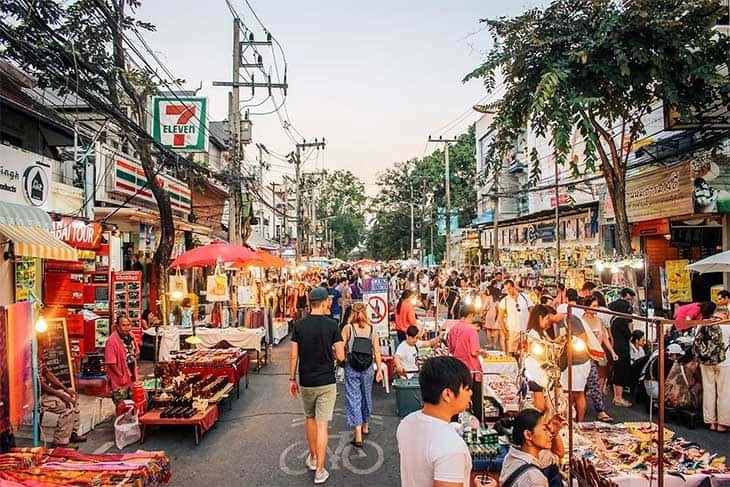
Chiang Mai Walking Street, image credit: Destino Chiang Mai

Lanna Square

Still in the Old City area, there’s this outdoor food court – a good starting point for beginners, hehe. Why beginners? Because I feel like it’s more geared towards tourists; prices are slightly higher, and the food selection is more international, not just Thai. You’ll find everything from Japanese dishes and Western comfort food like beef brisket and loaded fries, to ice cream. There’s even Burmese cuisine I’ve never tried before. There’s also live music on the front stage, which adds a nice atmosphere. It’s usually busy, but in a comfortable way – not too hectic and not overly loud (perfect for millenials, hehe). It does get a bit quieter when the Chiang Mai Walking Street market is on.

🍜 Food and drink highlights: prawn pad see ew from Thai Taste, black sesame mochi, chicken satay
💵 Prices: 60 – 300 baht
Opening time: Every day, 5pm – midnight
📍 Location: Chiang Mai Old Town – 5 Ratvithi Rd , Tambon Si Phum
🚽 Toilet: At the entrance of the market (bring a 5-baht coin)
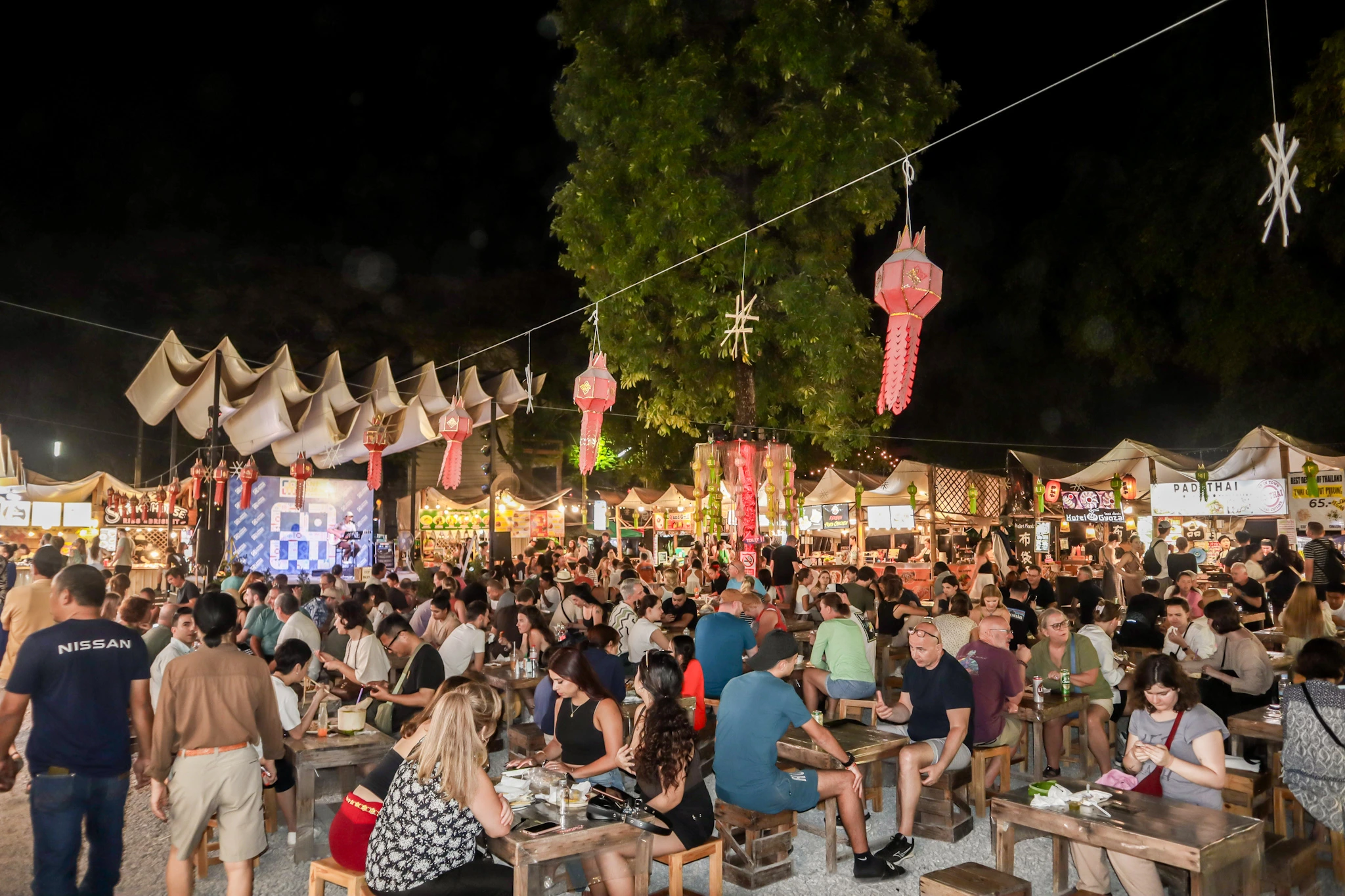
A busy night at Lanna Square, Image credit: Lanna Square Facebook page

You may also like this article: How to Stay in Thailand Visa-Free for 90 Days

Kalare Night Bazaar

Every time I come here or bring friends along, I have one very important mission: to eat the crispy pork belly from this stall right in the centre of the market. There are plenty of other tasty options too, but from what I’ve observed, many people come here for the seafood feast. It can get quite busy around dinner time and seating is limited, but if you’re patient and keep an eye out, you’ll eventually find a table. The market is part of the Night Bazaar, so it’s also a nice area to wander around and do a bit of shopping afterwards. And in case this helps with planning, there are a few five-star hotels nearby, like Marriott and Mövenpick.

🍜 Food and drink highlights: crispy pork belly, chicken and pork gyoza, pad see ew, fruit smoothies
💵 Prices: 50 – 250 baht
Opening time: Every day, 5pm – midnight
📍 Location: 2 Changklan Rd, Chang Khlan Sub-district
🚽 Toilet: Inside the market (bring a 5-baht coin)
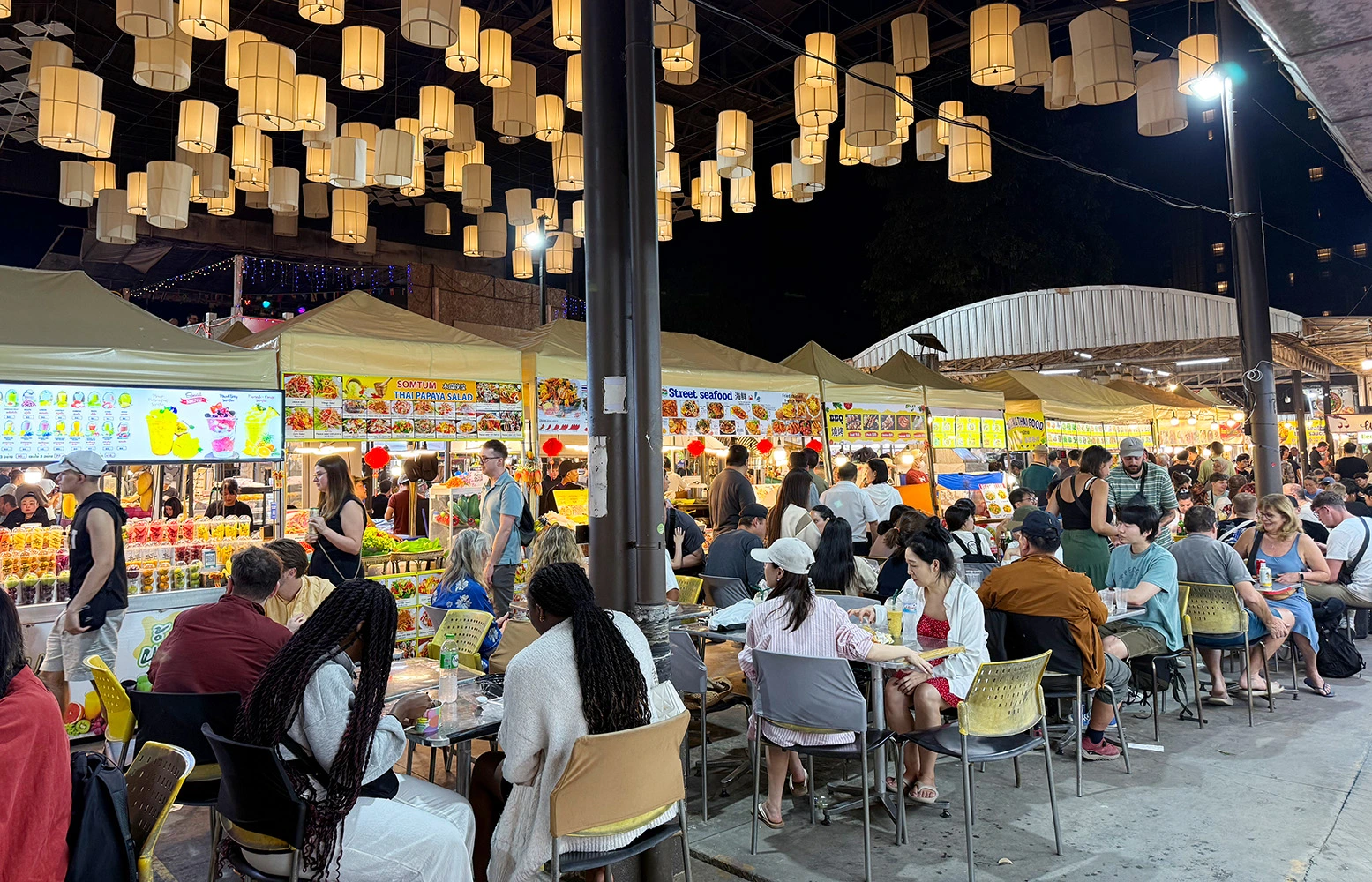
The lively ambiance at Kalare Night Bazaar

One Nimman Street Food Market

This market is located in an open-air shopping space called One Nimman. They have a backyard area that regularly turns into markets and events; from vintage markets and wine festivals to flower festivals. On weekends, it usually hosts a street food market. If you’re going with friends or a group, I like how convenient the place is: you can explore the food stalls, sit and eat in the market area, and then grab coffee at one of the nice cafés afterwards.

🍜 Food and drink highlights: steamed buns, pizza, gyoza, Thai tea
💵 Prices: 50 – 200 baht
Opening time: Friday – Sunday, 3pm – 10pm
📍 Location: 1 Nimmanhemin Road, Suthep, Mueang Chiang Mai
🚽 Toilet: Within the shopping centre
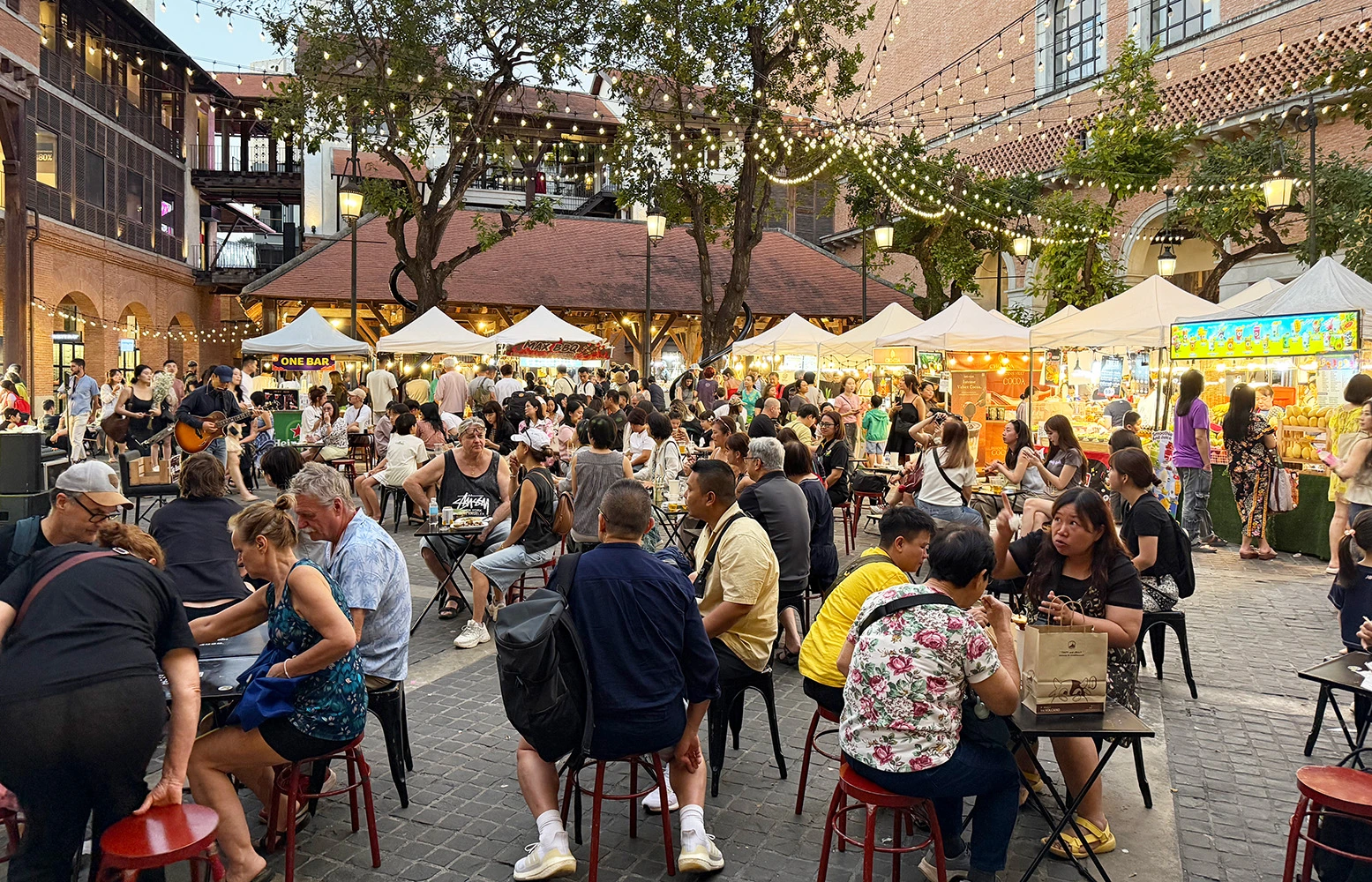
There’s also live entertainment at One Nimman Street Food Market

Coconut Market

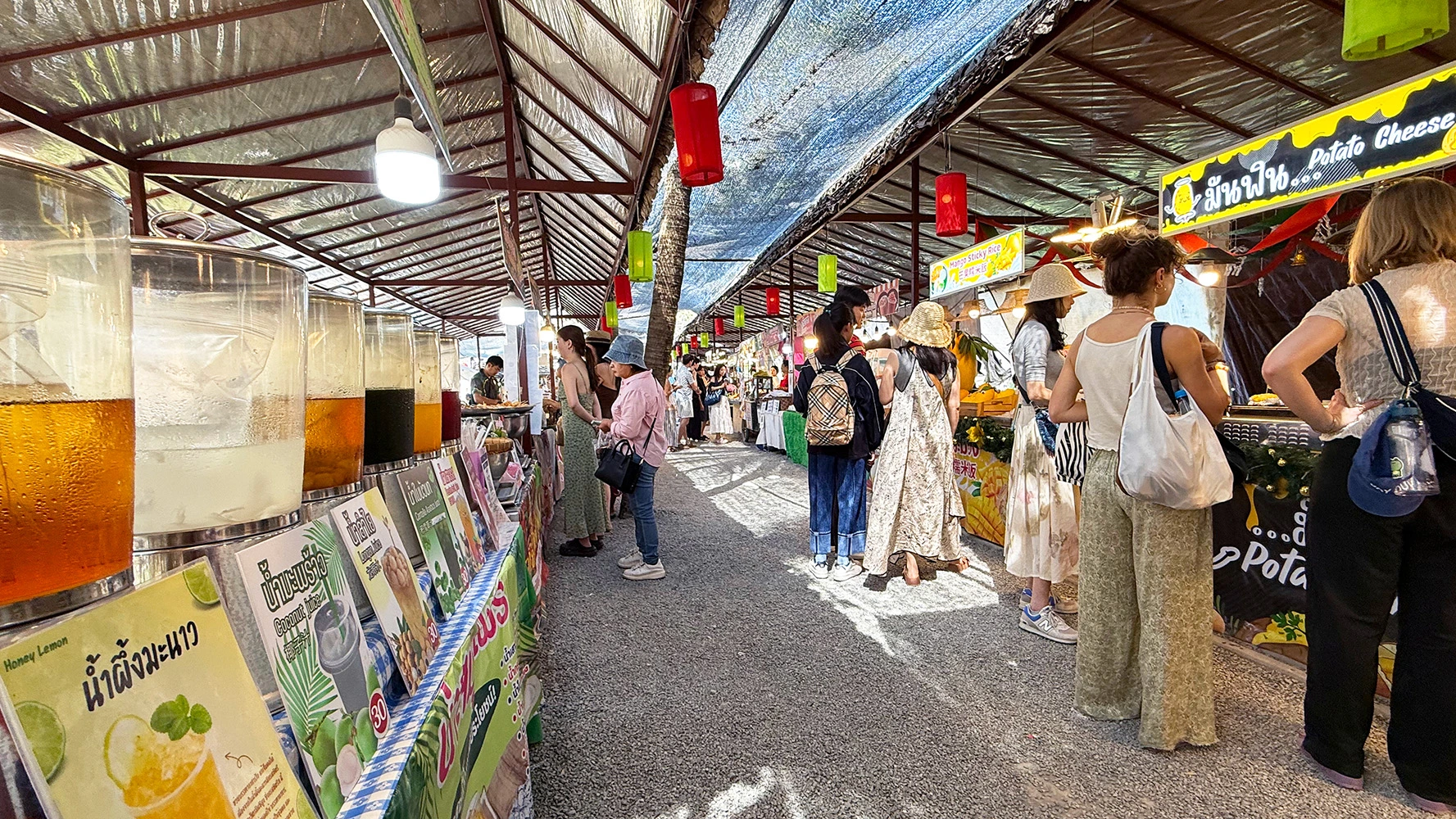
Just when you think you’ve already been to all the food markets in Chiang Mai, there’s the Coconut Market. At first, I assumed everything there would be coconut-based (which I don’t really like – ironic, I know). But it turns out it’s just a regular market, though yes, coconuts and coconut ice cream do make their expected appearances, hehe. I think the name simply comes from the setting: an open field surrounded by coconut trees.

🍜 Food and drink highlights: tom yum noodles, som tum salad, grilled chicken, watermelon slushies
💵 Prices: 20 – 100 baht
Opening time: Saturday & Sunday, 8am – 3pm
📍 Location: 94 Soi Ban Tong 2 Mu 3, Fa Ha, Chiang Mai
🚽 Toilet: Inside the market
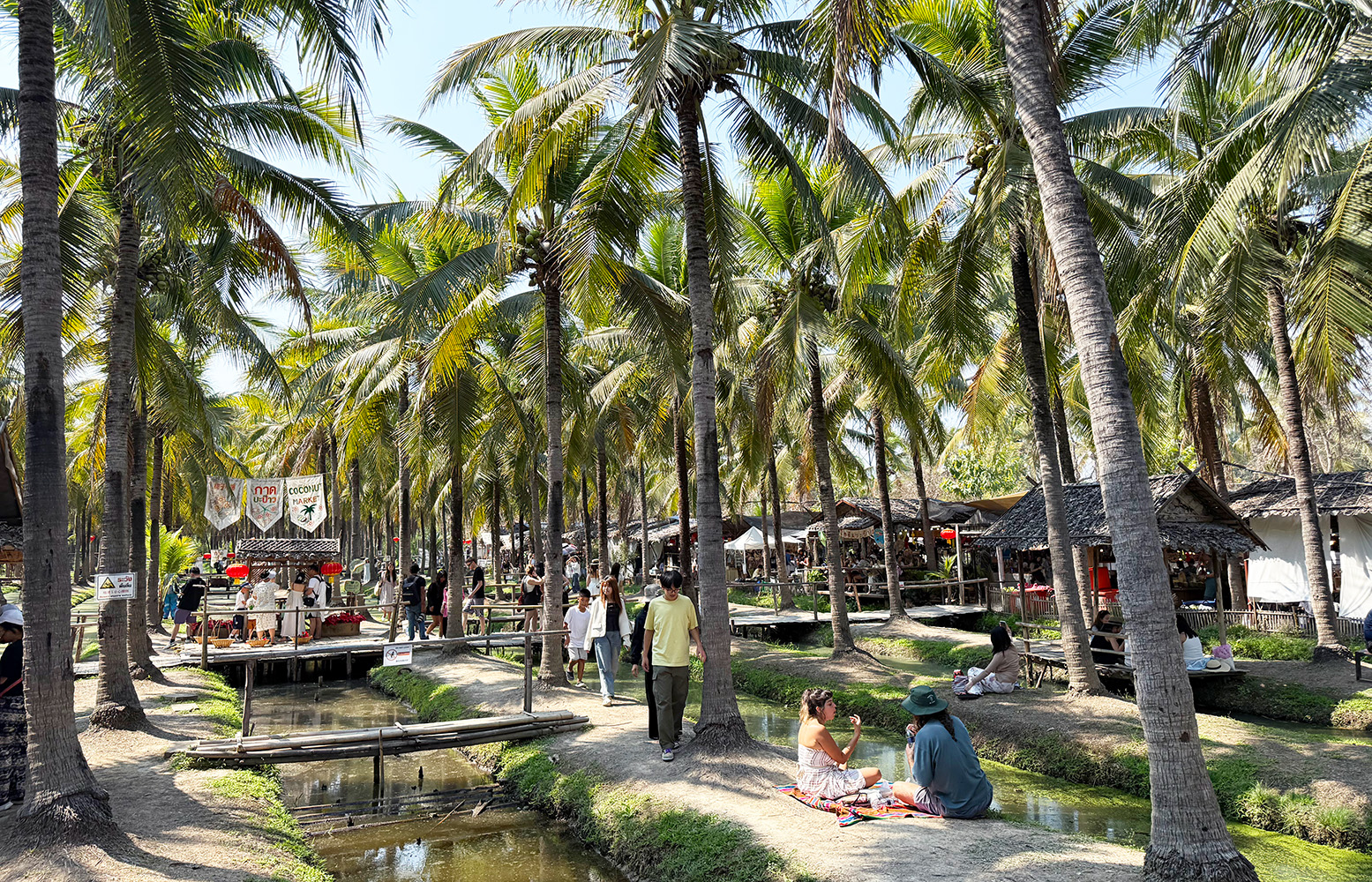
The relaxed weekend vibe at Coconut Market

Food markets are honestly one of the best ways to experience Chiang Mai. They’re lively, affordable, and full of little discoveries – whether it’s a new snack you’ve never tried before or a stall you keep coming back to for that one dish you can’t stop thinking about. If you’re visiting the city, try to explore at least one or two of these markets. Hope you find this information useful, and thank you for reading! 😊
You might also want to read

A Guide to Doi Suthep Temple, Chiang Mai: 4 Things to Know Image

29 Jan 2026 by Bella in Asia

A Guide to Doi Suthep Temple, Chiang Mai: 4 Things to Know

I’ve been in Chiang Mai, Thailand for two weeks at the time I’m writing this, and I already feel at home. So much so that I haven’t really explored much yet. I’ve fallen into a nice routine of jiu jitsu training and working from home - which I absolutely love. So when my two best friends decided to visit, it felt like the perfect time for a proper weekend adventure. At the top of my list was Wat Phra That Doi Suthep, one of Chiang Mai’s most sacred temples. Located on Doi Suthep mountain, it overlooks the city and it’s only 45 minutes drive from the city centre. Known for its golden pagoda, beautiful view, and the famous 306-step dragon staircase, it’s one of those places that feels both grounding and magical. First Thing First: How to Get to Doi SuthepGetting to the Top: Stairs or Cable Car?Temples, Rituals, and Quiet MomentsA 50-Baht Ride Down The Mountain First Thing First: How to Get to Doi Suthep After researching how to get there (the options are a private car, public transport from Chiang Mai Zoo, or a Grab car), we decided to just book a Grab car so we could head up early. And by early, I mean 7am - which, by the way, was a huge achievement for the three of us, considering we love a good sleep-in. I read that the sunrise from the viewpoint is amazing, but let’s not push it right? 7am felt ambitious enough, lol. One thing about taking a Grab car up there: some drivers might be a bit hesitant as they might struggle to find passengers on the way back down. In our case, the driver just asked if we could pay cash instead, which was absolutely fine.  You may also like this article: Swapping Beaches for Mountaintops: A Chilly Christmas in Bromo Outside of the temples - people often pray here too The drive up the mountain didn’t feel long at all, especially with good company. Once we reached the foot of the mountain, the road began winding upwards. On the way up, we passed keen runners and determined cyclists. There’s also the Monk’s Trail if you fancy a hike up, which is popular among locals and hikers looking for a more challenging route to the top. Distance-wise, it’s only around 10km from the city. Technically, I could run to Doi Suthep… but my poor knees would never survive the elevation! Haha. We were dropped off right at the temple entrance, where loads of songthaews (Thai public transport vehicles) were parked. That instantly allayed my worries after all the earlier stress about whether we’d be able to find a Grab car back down.  Getting to the Top: Stairs or Cable Car? Okay, so there are two ways to get to the top: the famous 306-step dragon staircase or the cable car. With a little bit of persuasion, I managed to convince the girls that the stairs were the right choice! It’s totally up to you if you want to take the cable car, but there’s usually a queue. The morning air is pretty chilly too, which makes a huge difference. Climbing the stairs when you’re not hot and drenched in sweat is way more pleasant. So yeah… give it a try 😉 Me and my best friends in front of Doi Suthep's famous 306-step dragon staircase Temples, Rituals, and Quiet Moments Once we made it to the top, there are several temples you can to visit. Just a few things to keep in mind: wear respectful clothing; no tank tops, no shorts, and no shoes inside the temples. You’ll find shoe racks by the entrance where you can safely leave them. Within the temple areas, keep your voice low and your movements calm. You’ll often see people circling the pagoda clockwise three times, and you’re welcome to join in. There’s also a prayer you can recite to worship the pagoda. There are prayer rooms you can walk into as well, and you’re free to pray in whatever belief you hold. I believe gratitude and blessings exist in every religion, so I visited a few of the prayer rooms with my friends - it felt very soothing. And if praying or rituals aren’t your thing, you can simply wander around and admire the beautiful Buddhist architecture. Once you’re done, take some time to soak in the view of Chiang Mai from the viewing point before heading back down. Oh, one interesting thing I found in one of the prayer rooms - which I later read that it is actually a fortune-telling area, is that you can step in and say a personal prayer, whether it’s about life, love, decisions, or anything. Once you’re done, you shake a bamboo cylinder provided there until a numbered stick falls out. That number is considered your sign. You then match it to a paper on the wall that you can take, with a written fortune. People usually make a small donation afterwards. You may also like this article: 48 Hours in Amsterdam: A Quick Trip, Big Memories My friend Jessica in the fortune-telling area A 50-Baht Ride Down The Mountain We wrapped up our trip with coffee at one of the local food stalls near the dragon staircase. We sat outside on the balcony, watching songthaews line up to head off to different destinations. We then decided to stop by the closest national park, which I’ll cover in the next article. By the way, a one-way songthaew ride to the national park (it’s close enough to the city) costs just 50 baht! Super affordable and so much fun. We shared the ride with other travellers - an experience I hadn’t had in years.  The iconic red songthaew (Thai public transport vehicle) lining up by the entrance of Doi Suthep Anyway, that’s my Doi Suthep adventure with my girls. Hope you found some useful tips if you’re planning a trip there or to Chiang Mai in general. I’ll be in this beautiful city for a while, so expect more articles on other spots, restaurants, events, and whatnot. Stay tuned on www.kata-bella.com and follow us on Instagram @katabellamag. Planning your trip to Doi Suthep ⏰ Opening hours: Daily, 6am - 6pm 🌅 Best time to visit: Sunrise or sunset for the magical views 📍Location: Around 10 - 13 km from the city centre, on Doi Suthep Mountain 🎟️ Entrance fee: 50 baht for foreign visitors (for temple maintance) 🚘 Transportation: Grab car, songthaew, private car, or a mountain bike! ;) 🚶🏼 Access to the temple: Stairs or cable car 👗 Dress code: Clothing that covers shoulders and knees 🚽 Toilets: Available downstairs near the cable car entrance (they're clean!) Personal tips: Get there as early as you can - the weather is cool in the morning and there are fewer people. Try the fortune-telling area and do the pagoda loop for the full experience. Go to the toilet before heading up and bring a water bottle. It gets really hot once the sun comes out.

Brazil and Indonesia: Fun Finds in Similarities Image

10 Dec 2024 by Bella in South America

Brazil and Indonesia: Fun Finds in Similarities

Brazil has won my heart twice. I first went there to train Jiu Jitsu because, well... Brazilian Jiu Jitsu. Plus, my former coach lives there, on a charming little island called Florianopolis, just an hour’s flight from São Paulo. So, yes, imagine the journey from Bali! But it was totally worth it.  Anyway, Kata Bella not here to write about my Jiu Jitsu trip, but what really fascinated me was how similar Brazil is to Indonesia. Here are a few interesting things I noticed. Can’t wait to go back soon! The Language I know it’s obvious - because Brazilians speak Portuguese, and Indonesia was colonised by the Portuguese (among others). So, when I first landed at the airport, many words already felt familiar to me. I could pretty much guess their meanings. As I started learning Portuguese, I found it surprisingly easy to memorise the vocabulary because of the similarities. Some words are even the same in Indonesian, just pronounced differently. Here are a few for fun: Mesa (Indonesian: Meja) - Table Manteiga (Indonesian: Mentega) - Butter Festa (Indonesian: Pesta) - Party Janela (Indonesian: Jendela) - Window Sapato (Indonesian: Sepatu) - Shoes Igreja (Indonesian: Gereja) - Church Escola (Indonesian: Sekolah) - School  The Snacks I have this habit of exploring supermarkets when I travel overseas because I love discovering products we don’t have back home. And there was one aisle in Hyperbom that instantly took me back to my childhood days in Java - basically, it was filled with traditional snacks from Java, but in Brazilian versions. Paçoca vs Enting Enting (Caramelised peanuts pressed into bite-sized bars) Flocos de Arroz vs Jipang (Puffed rice coated in sweet syrup) Pé de Moleque vs Ampyang (Roasted peanuts in caramelised sugar) Cocada com Açúcar Mascavo vs Kembang Gula Kelapa (Candied shredded coconut) Geladinho vs Es Lilin (Ice lollies) Speaking of childhood snacks, I also found Trakinas, those chocolate sandwich snacks I haven’t seen in Indonesia since the 90s! That was definitely one of the highlights of my trip. Alright, that’s all for now about Brazil! I’ve got more to share from another trip, but I’ll save it maybe for Part 2. Tchau tchau!

How to Stay in Thailand Visa-Free for 90 Days Image

18 Feb 2026 by Bella in Asia

How to Stay in Thailand Visa-Free for 90 Days

If you’re Indonesian, you probably already know that Thailand is among the countries we can enter without a visa. But I only recently found out that not many people realise you can actually stay for a total of 90 days. You get 60 days visa-free when you first enter, and then you can apply for an extension at the local immigration office. At first, I thought I needed a visa agent because I’d never done anything like this before and was scared of getting rejected. But when I went to the immigration office in Chiang Mai for the first time, they happily explained the steps. It was surprisingly easy - and you can absolutely do it yourself. Check how many days you can stay in Thailand visa-free on Thai e-visa official website You may also like this article: A Guide to Doi Suthep Temple, Chiang Mai: 4 Things to Know The first 60 daysArriving in ThailandAfter your first 30 daysApplying for your extensionFinal Thoughts The first 60 days After checking several trusted official websites, the rule (at the time I’m writing this) hasn’t changed. Indonesians can enter Thailand visa-free and stay for 60 days, despite the uncertain news you might have seen on social media. What shocked me was that during check-in at Soekarno–Hatta, when I showed my return ticket, the staff questioned my 60-day stay - even the immigration officer seemed unsure. But don’t worry. If you’re ever in doubt, you can check the official Thai e-visa official website and enter your nationality (if you’re not Indonesian) to confirm whether you can enter visa-free and how long you’re allowed to stay. Fill in TDAC online before you fly Arriving in Thailand Don’t forget to fill in the TDAC (Thailand Digital Arrival Card) form before arriving in Thailand - you can do it a day before your trip to stay organised. In the form, you’ll be asked for your return flight details. When you’re in the immigration line, you just need to scan the barcode sent to your email. As long as you haven’t been going in and out of Thailand a suspicious number of times in the past few months, you should be fine. I landed at Suvarnabhumi Airport in Bangkok, and after scanning the QR code, they didn’t even ask me any questions. You may also like this article: What It’s Like to Live in Bali: Cost, Culture, and Everyday Life After your first 30 days Depending on where you’re staying in Thailand, you can look up the nearest immigration office. I was based in Chiang Mai, and the immigration office there is conveniently located inside a shopping mall called Central Festival Chiang Mai. After you’ve spent a month in the country, or basically before your 60 days run out, you can apply for a 30-day extension. Here’s what you’ll need: Applying for your extension It’s actually pretty straightforward once you have all your documents ready. You can show up during opening hours, but like most administrative offices, I’d suggest going early. I’m not sure about other cities, but in Chiang Mai they’re closed for lunch from 12–1pm. When I arrived, an officer checked our documents first. They’ll let you know if you’re missing anything or forgot to fill in a section. If everything’s in order, they’ll sign it off and give you a queue number. After that, you just sit inside and wait for your number to be called. When it’s your turn, hand over the checked documents and pay the 1,900 Baht fee in cash. Then you wait another 15–30 minutes (depending on how busy it is). Your name will be called, they’ll take a quick photo of you, and hand back your passport with a new stamp giving you another 30 days to stay in this beautiful country. In my personal experience, I wasn’t asked a single question, and the staff were actually pretty nice - you know how immigration offices can sometimes feel a bit intimidating? Anyway, that’s it. The whole process was done in one day, which was great and super efficient. Final Thoughts So yes, staying in Thailand visa-free for 90 days is completely doable for Indonesians and many other nationalities, and you don’t need an agent to make it happen. It might feel intimidating at first (especially with all the mixed information online), but once you understand the steps, it’s actually very manageable. My biggest tips are to double-check official sources, prepare your documents properly, and go early to the immigration office. That’s really it. Hope you find this article useful and happy holiday!