Kata Bella Logo

Asia

Chiang Mai Food Markets: 8 Popular Spots to Eat
12 Mar 2026 by Bella

Chiang Mai Food Markets: 8 Popular Spots to Eat Image

Chiang Mai Food Market

If I live in Chiang Mai (which I kinda do now), I honestly don’t see why I’d ever need to cook. You’re spoiled with food options here, across all kinds of cuisines and prices. Sure, every few metres you can find a decent Thai restaurant, but while most of them are good, I find eating at the markets much more interesting because you can try a little bit of many different things in one place.

Here are some of them that I’ve been to.

You may also like this article: A Guide to Doi Suthep Temple, Chiang Mai – 4 Things to Know

Chiang Mai Walking Street

This is probably the biggest market in Chiang Mai, held every Sunday. It stretches from Tha Pae Gate all the way to Wat Phra Singh – if you walk the whole route, it’s around 1 km long. Most vendors sell handcrafted items, clothes, and souvenirs, but you’ll also find buzzing food markets inside the courtyards of two temples along the way. Once your tummy is full, you can browse the street vendors or surrender to the joy of a foot massage which you can find right outside the temples – like….a whole street of pop up foot massage chairs.

🍜 Food and drink highlights: chicken and pork skewers, grilled oyster mushrooms, pad thai, longan juice
💵 Prices: 10 – 150 baht
Opening time: Every Sunday, 4pm – late
📍 Location: Chiang Mai Old Town – walk from Tha Pae Gate
🚽 Toilet: At the temple entrances (bring a 5-baht coin)
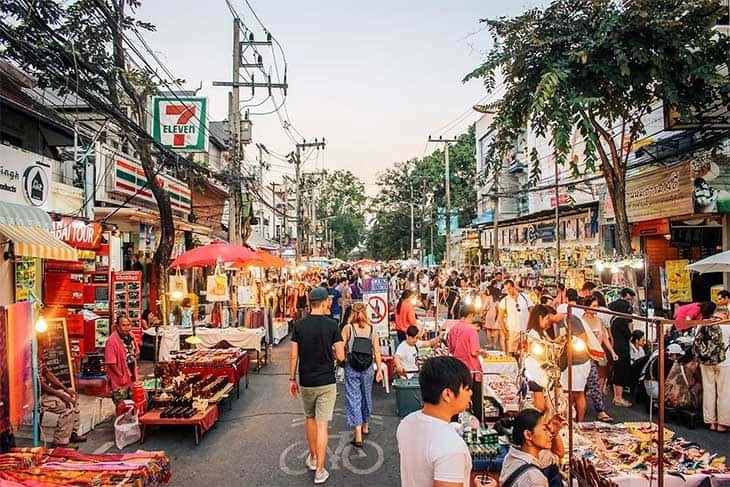
Chiang Mai Food Market - Chiang Mai Walking Street

Chiang Mai Walking Street, image credit: Destino Chiang Mai

Lanna Square

Still in the Old City area, there’s this outdoor food court – a good starting point for beginners, hehe. Why beginners? Because I feel like it’s more geared towards tourists; prices are slightly higher, and the food selection is more international, not just Thai. You’ll find everything from Japanese dishes and Western comfort food like beef brisket and loaded fries, to ice cream. There’s even Burmese cuisine I’ve never tried before. There’s also live music on the front stage, which adds a nice atmosphere. It’s usually busy, but in a comfortable way – not too hectic and not overly loud. It does get a bit quieter when the Chiang Mai Walking Street market is on.

🍜 Food and drink highlights: prawn pad see ew from Thai Taste, black sesame mochi, chicken satay
💵 Prices: 60 – 300 baht
Opening time: Every day, 5pm – midnight
📍 Location: Chiang Mai Old Town – 5 Ratvithi Rd , Tambon Si Phum
🚽 Toilet: At the entrance of the market (bring a 5-baht coin)
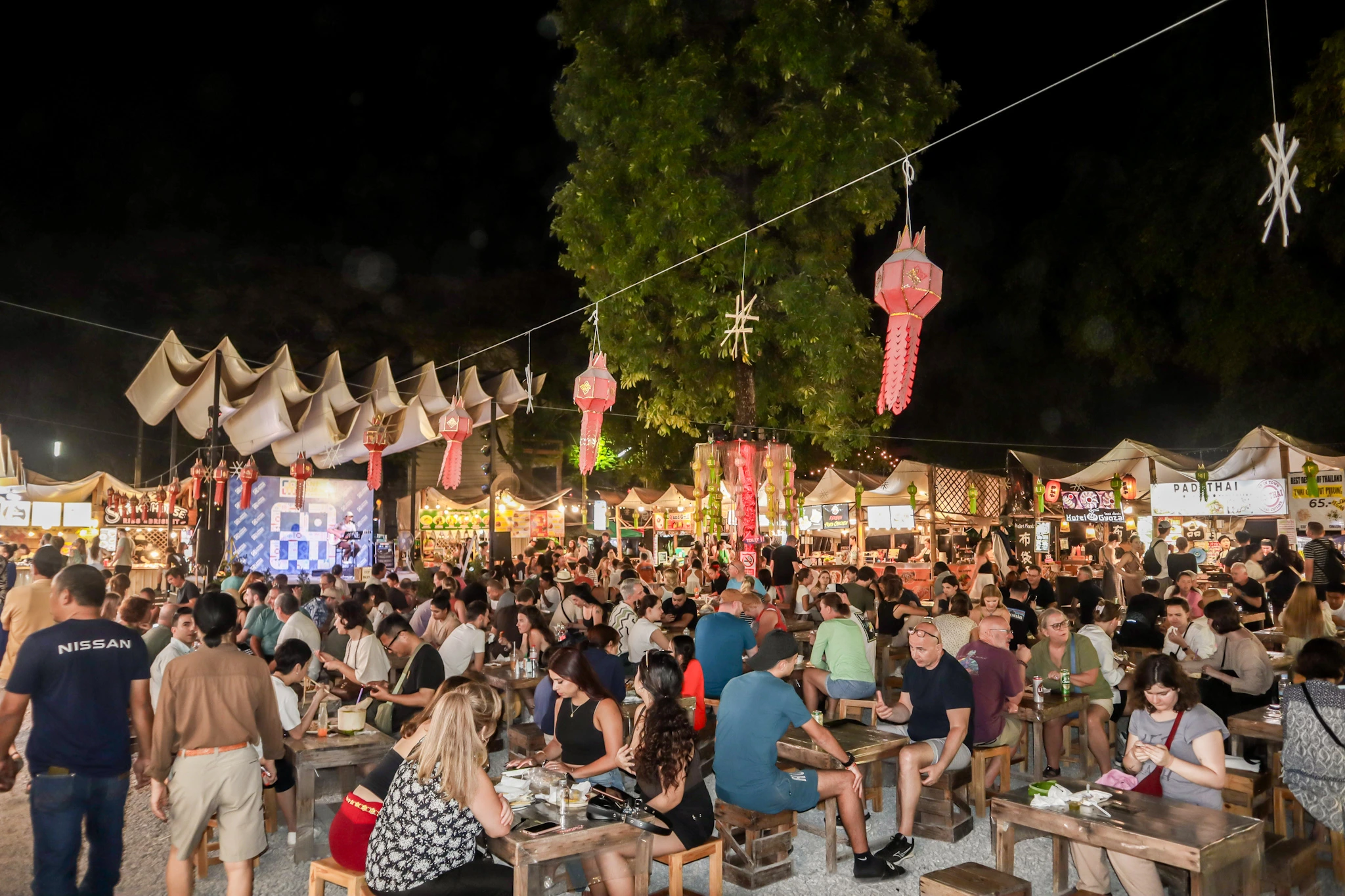
Chiang Mai Food Market - Lanna Square Chiang Mai

A busy night at Lanna Square, Image credit: Lanna Square Facebook page

You may also like this article: How to Stay in Thailand Visa-Free for 90 Days

Kalare Night Bazaar

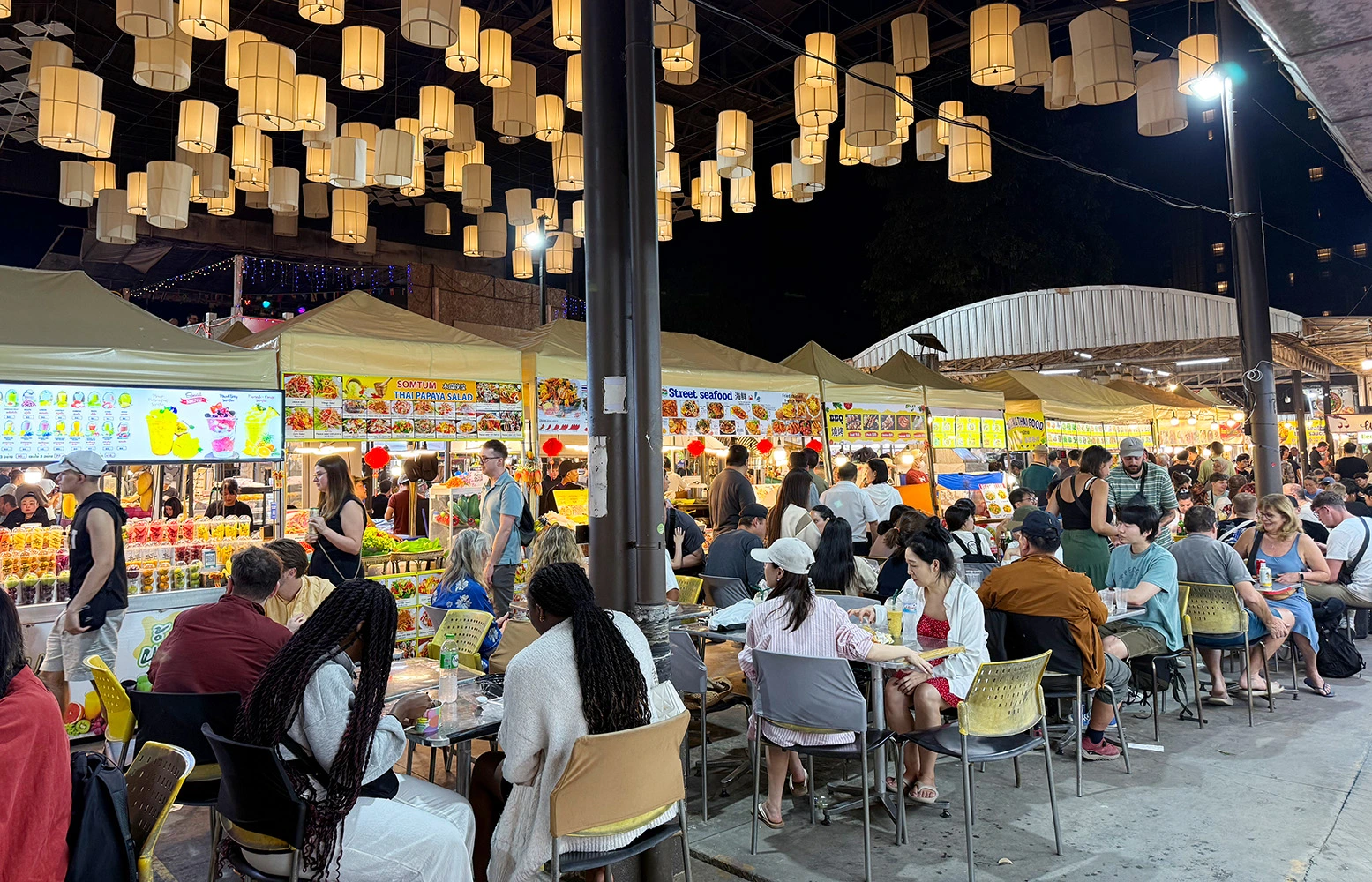
Every time I come here or bring friends along, I have one very important mission: to eat the crispy pork belly from this stall right in the centre of the market. There are plenty of other tasty options too, but from what I’ve observed, many people come here for the seafood feast. It can get quite busy around dinner time and seating is limited, but if you’re patient and keep an eye out, you’ll eventually find a table. The market is part of the Night Bazaar, so it’s also a nice area to wander around and do a bit of shopping afterwards. And in case this helps with planning, there are a few five-star hotels nearby, like Marriott and Mövenpick.

🍜 Food and drink highlights: crispy pork belly, chicken and pork gyoza, pad see ew, fruit smoothies
💵 Prices: 50 – 250 baht
Opening time: Every day, 5pm – midnight
📍 Location: 2 Changklan Rd, Chang Khlan Sub-district
🚽 Toilet: Inside the market (bring a 5-baht coin)
Chiang Mai Food Market - Kalare Night Bazaar

The lively ambiance at Kalare Night Bazaar

Waroros Market

Some people call it Waroros, some Warorot, and maybe both are correct? It’s a traditional market where people come to buy herbs, kitchen ingredients, and everyday essentials. I first went to Waroros to buy mango and orange jellies (they’re very good!). But there are also street food stalls around the market, plus a food court inside if you get hungry in the middle of shopping. There are also fresh fruit vendors – I bought lots of strawberries and rose apples, and the prices here are cheaper because it’s not a tourist spot.

🍜 Food and drink highlights: Thai grilled sausage, Thai iced coffee
💵 Prices: 60 – 150 baht
Opening time: Monday – Sunday, 6am – 5pm
📍 Location: 10,12 14 Wichayanon Rd, Chang Moi Sub-district, Mueang Chiang Mai District
🚽 Toilet: Ask the market vendors, because I didn’t find any
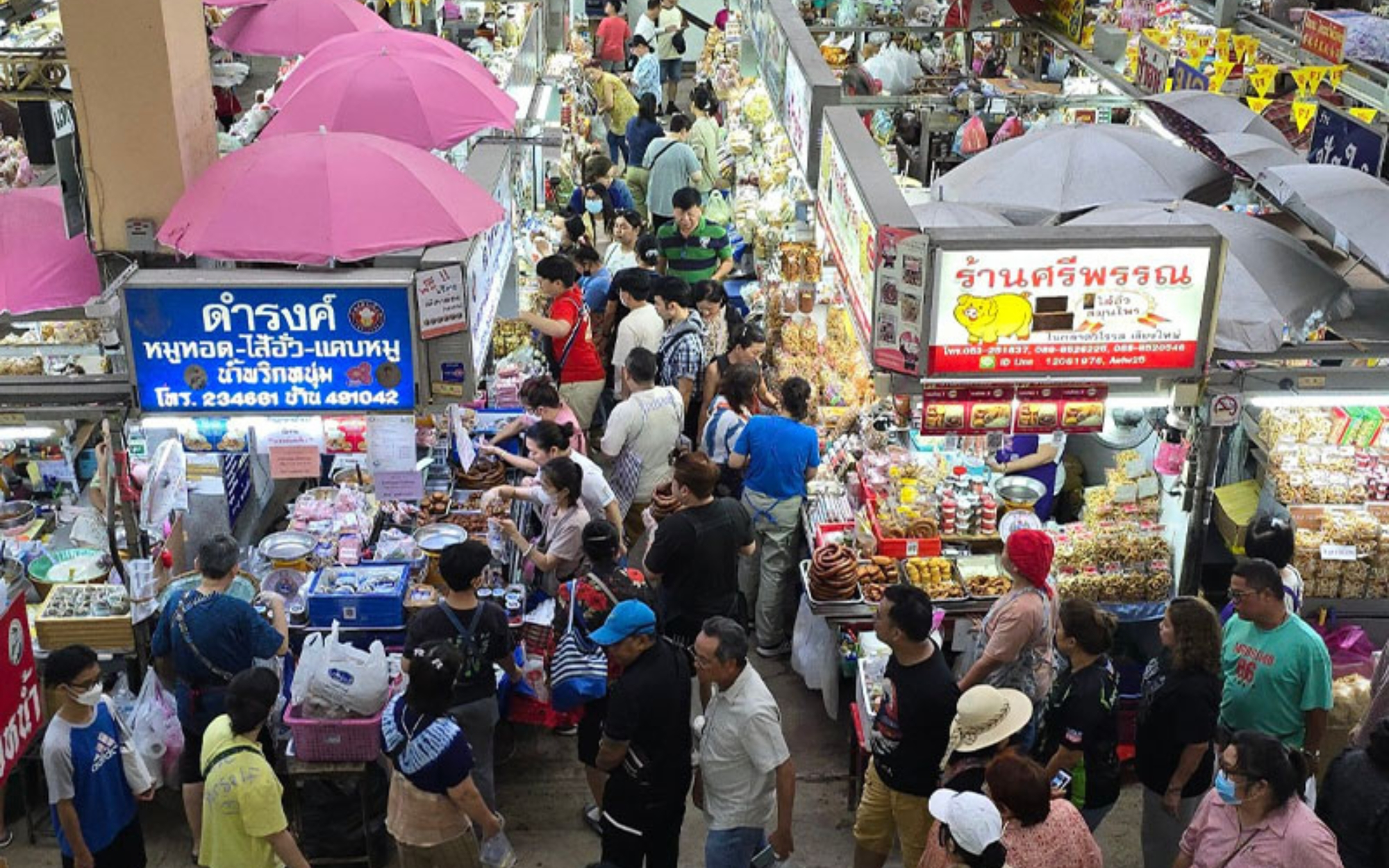
Image credit: Say hi Thailand website

Ton Lam Yai Market

While I was at Waroros Market, I noticed that right behind the busy market area, there’s another market filled with local food stalls. It’s more of an everyday market, selling fresh produce and local goodies, and it feels even more local compared to Waroros with fewer tourists and more locals doing their daily shopping. There’s a Michelin-recognised noodle spot here, but my personal highlight has to be the little donut shop that makes the animal-shaped donuts.

🍜 Food and drink highlights: animal-shaped donuts
💵 Prices: 20 – 100 baht
Opening time: Monday – Sunday, 7pm – 5.30pm
📍 Location: 88/1 Wichayanon Rd, Chang Moi Sub-district, Mueang Chiang Mai District
🚽 Toilet: Ask the market vendors, because I didn’t find any
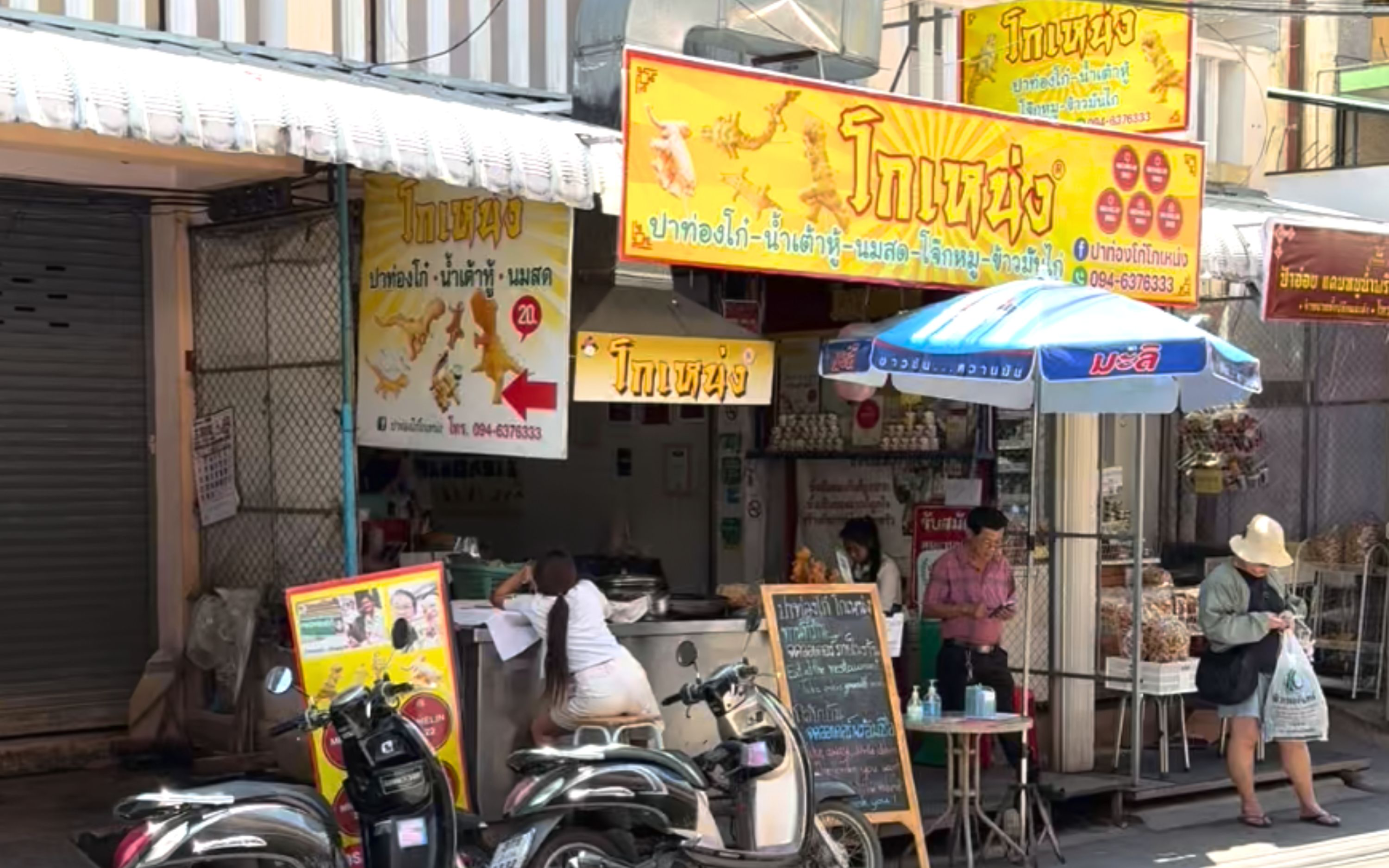
The place I got donuts from

Jing Jai Market

Lots of people go to Jing Jai for shopping – there are so many amazing local brands, handmade items, crafts, ceramics, and other interesting things here. But it’s become my Sunday ritual to have lunch here every week. Please note that even though Google says it’s open every day, the actual market stalls are only here on Saturday and Sunday until around 3pm. The area with restaurants and the supermarket, though, is open daily. It took me three trips to figure that out, so I’m sharing this to save you the disappointment of turning up on a random weekday expecting the full market vibe.

🍜 Food and drink highlights: pork satay with peanut sauce, crispy fried chicken
💵 Prices: 60 – 200 baht
Opening time: Saturday – Sunday, 8am – 3pm
📍 Location: 46 Atsadathon Rd, Pa Tan Sub-district, Mueang Chiang Mai District
🚽 Toilet: Within the market
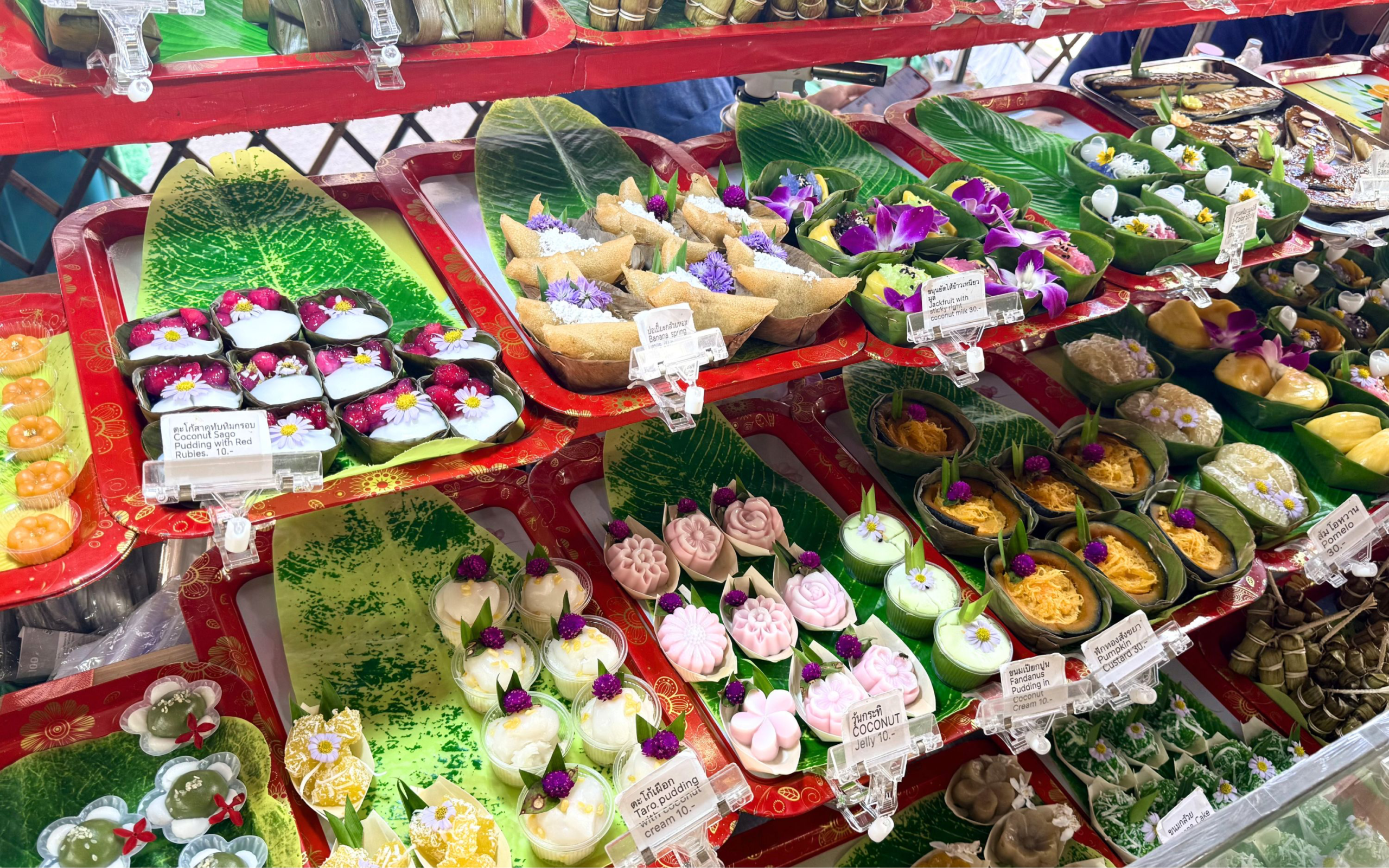
Very pretty Thai snacks in one of the stalls at Jing Jai market

One Nimman Street Food Market

This market is located in an open-air shopping space called One Nimman. They have a backyard area that regularly turns into markets and events; from vintage markets and wine festivals to flower festivals. On weekends, it usually hosts a street food market. If you’re going with friends or a group, I like how convenient the place is: you can explore the food stalls, sit and eat in the market area, and then grab coffee at one of the nice cafes afterwards.

🍜 Food and drink highlights: steamed buns, pizza, gyoza, Thai tea
💵 Prices: 50 – 200 baht
Opening time: Friday – Sunday, 3pm – 10pm
📍 Location: 1 Nimmanhemin Road, Suthep, Mueang Chiang Mai
🚽 Toilet: Within the shopping centre
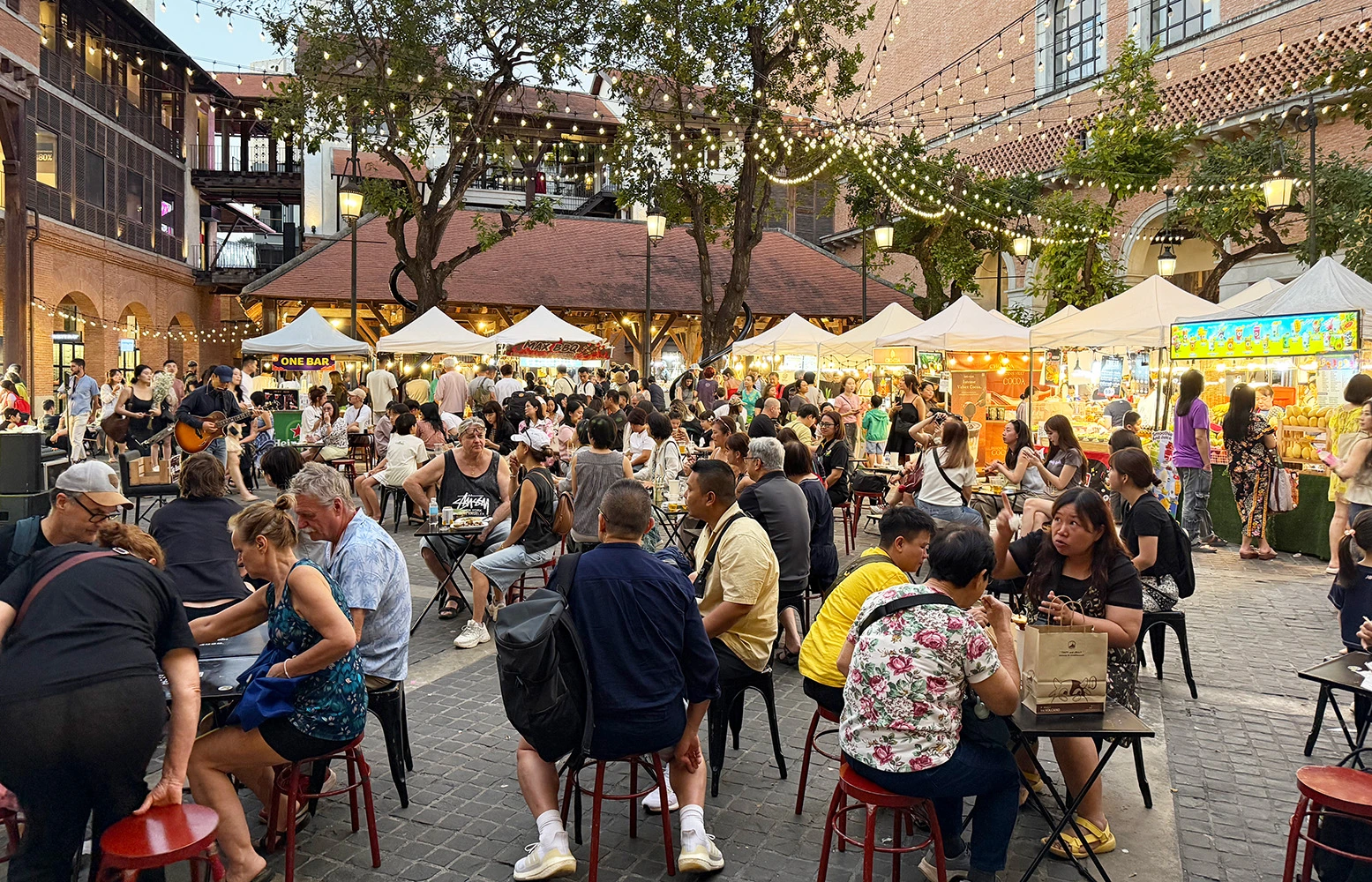
Chiang Mai Food Market - One Nimman Street Food Market

There’s also live entertainment at One Nimman Street Food Market

Coconut Market

Just when you think you’ve already been to all the food markets in Chiang Mai, there’s the Coconut Market. At first, I assumed everything there would be coconut-based (which I don’t really like – ironic, I know). But it turns out it’s just a regular market, though yes, coconuts and coconut ice cream do make their expected appearances, hehe. I think the name simply comes from the setting: an open field surrounded by coconut trees.

🍜 Food and drink highlights: tom yum noodles, som tum salad, grilled chicken, watermelon slushies
💵 Prices: 20 – 100 baht
Opening time: Saturday & Sunday, 8am – 3pm
📍 Location: 94 Soi Ban Tong 2 Mu 3, Fa Ha, Chiang Mai
🚽 Toilet: Inside the market
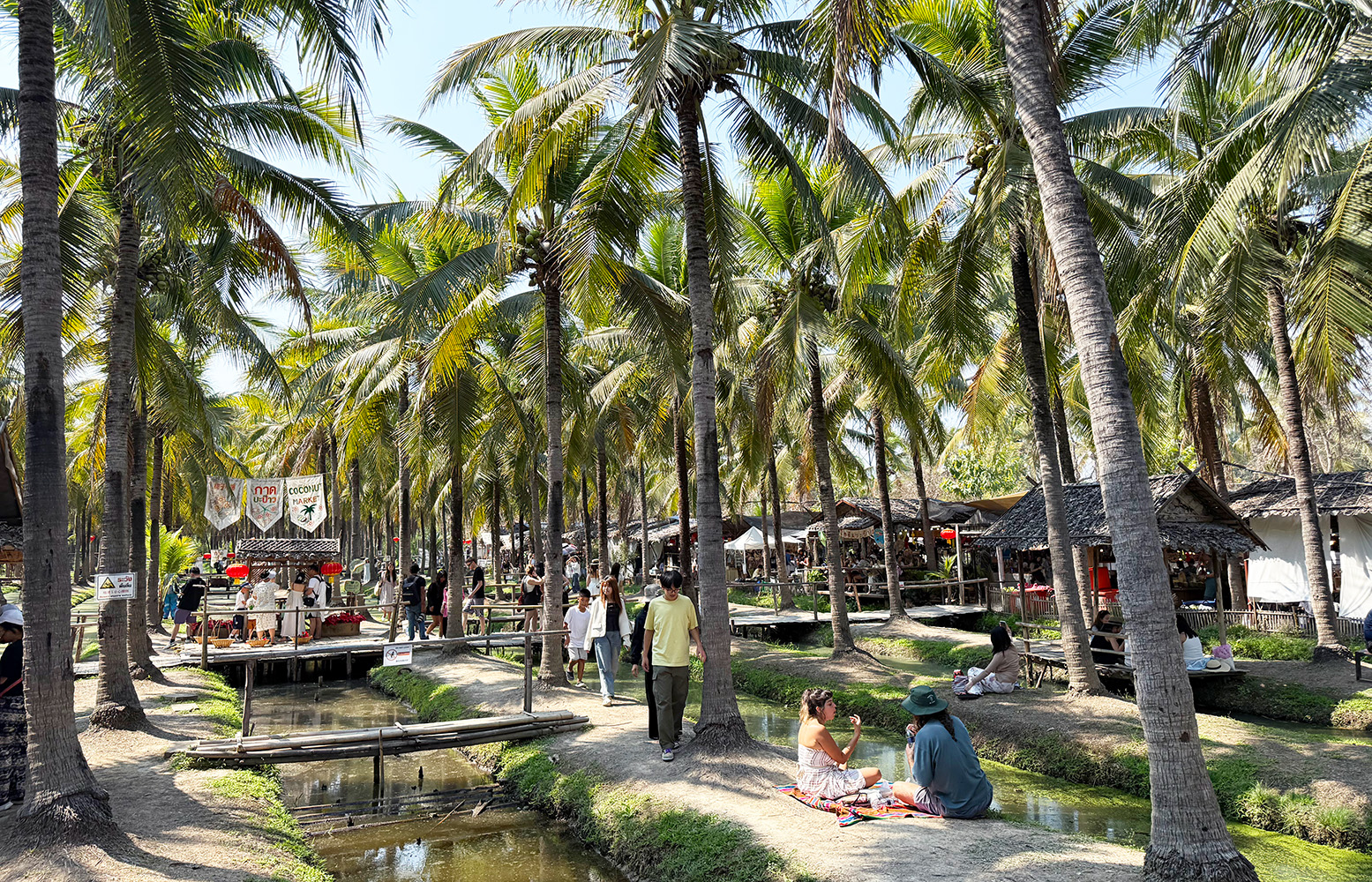
Chiang Mai Food Market - Coconut Market

The relaxed weekend vibe at Coconut Market

Food markets are honestly one of the best ways to experience Chiang Mai. They’re lively, affordable, and full of little discoveries – whether it’s a new snack you’ve never tried before or a stall you keep coming back to for that one dish you can’t stop thinking about. If you’re visiting the city, try to explore at least one or two of these markets. Hope you find this information useful, and thank you for reading! 😊
You might also want to read

How to Stay in Thailand Visa-Free for 90 Days Image

18 Feb 2026 by Bella in Asia

How to Stay in Thailand Visa-Free for 90 Days

If you’re Indonesian, you probably already know that Thailand is among the countries we can enter without a visa. But I only recently found out that not many people realise you can actually stay for a total of 90 days. You get 60 days visa-free when you first enter, and then you can apply for an extension at the local immigration office. At first, I thought I needed a visa agent because I’d never done anything like this before and was scared of getting rejected. But when I went to the immigration office in Chiang Mai for the first time, they happily explained the steps. It was surprisingly easy - and you can absolutely do it yourself. Check how many days you can stay in Thailand visa-free on Thai e-visa official website You may also like this article: A Guide to Doi Suthep Temple, Chiang Mai: 4 Things to Know The first 60 daysArriving in ThailandAfter your first 30 daysApplying for your extensionFinal Thoughts The first 60 days After checking several trusted official websites, the rule (at the time I’m writing this) hasn’t changed. Indonesians can enter Thailand visa-free and stay for 60 days, despite the uncertain news you might have seen on social media. What shocked me was that during check-in at Soekarno–Hatta, when I showed my return ticket, the staff questioned my 60-day stay - even the immigration officer seemed unsure. But don’t worry. If you’re ever in doubt, you can check the official Thai e-visa official website and enter your nationality (if you’re not Indonesian) to confirm whether you can enter visa-free and how long you’re allowed to stay. Fill in TDAC online before you fly Arriving in Thailand Don’t forget to fill in the TDAC (Thailand Digital Arrival Card) form before arriving in Thailand - you can do it a day before your trip to stay organised. In the form, you’ll be asked for your return flight details. When you’re in the immigration line, you just need to scan the barcode sent to your email. As long as you haven’t been going in and out of Thailand a suspicious number of times in the past few months, you should be fine. I landed at Suvarnabhumi Airport in Bangkok, and after scanning the QR code, they didn’t even ask me any questions. You may also like this article: What It’s Like to Live in Bali: Cost, Culture, and Everyday Life After your first 30 days Depending on where you’re staying in Thailand, you can look up the nearest immigration office. I was based in Chiang Mai, and the immigration office there is conveniently located inside a shopping mall called Central Festival Chiang Mai. After you’ve spent a month in the country, or basically before your 60 days run out, you can apply for a 30-day extension. Here’s what you’ll need: Applying for your extension It’s actually pretty straightforward once you have all your documents ready. You can show up during opening hours, but like most administrative offices, I’d suggest going early. I’m not sure about other cities, but in Chiang Mai they’re closed for lunch from 12–1pm. When I arrived, an officer checked our documents first. They’ll let you know if you’re missing anything or forgot to fill in a section. If everything’s in order, they’ll sign it off and give you a queue number. After that, you just sit inside and wait for your number to be called. When it’s your turn, hand over the checked documents and pay the 1,900 Baht fee in cash. Then you wait another 15–30 minutes (depending on how busy it is). Your name will be called, they’ll take a quick photo of you, and hand back your passport with a new stamp giving you another 30 days to stay in this beautiful country. In my personal experience, I wasn’t asked a single question, and the staff were actually pretty nice - you know how immigration offices can sometimes feel a bit intimidating? Anyway, that’s it. The whole process was done in one day, which was great and super efficient. Final Thoughts So yes, staying in Thailand visa-free for 90 days is completely doable for Indonesians and many other nationalities, and you don’t need an agent to make it happen. It might feel intimidating at first (especially with all the mixed information online), but once you understand the steps, it’s actually very manageable. My biggest tips are to double-check official sources, prepare your documents properly, and go early to the immigration office. That’s really it. Hope you find this article useful and happy holiday! 

Brazil and Indonesia: Fun Finds in Similarities Image

10 Dec 2024 by Bella in South America

Brazil and Indonesia: Fun Finds in Similarities

Brazil has won my heart twice. I first went there to train Jiu Jitsu because, well... Brazilian Jiu Jitsu. Plus, my former coach lives there, on a charming little island called Florianopolis, just an hour’s flight from São Paulo. So, yes, imagine the journey from Bali! But it was totally worth it.  Anyway, Kata Bella not here to write about my Jiu Jitsu trip, but what really fascinated me was how similar Brazil is to Indonesia. Here are a few interesting things I noticed. Can’t wait to go back soon! The Language I know it’s obvious - because Brazilians speak Portuguese, and Indonesia was colonised by the Portuguese (among others). So, when I first landed at the airport, many words already felt familiar to me. I could pretty much guess their meanings. As I started learning Portuguese, I found it surprisingly easy to memorise the vocabulary because of the similarities. Some words are even the same in Indonesian, just pronounced differently. Here are a few for fun: Mesa (Indonesian: Meja) - Table Manteiga (Indonesian: Mentega) - Butter Festa (Indonesian: Pesta) - Party Janela (Indonesian: Jendela) - Window Sapato (Indonesian: Sepatu) - Shoes Igreja (Indonesian: Gereja) - Church Escola (Indonesian: Sekolah) - School  The Snacks I have this habit of exploring supermarkets when I travel overseas because I love discovering products we don’t have back home. And there was one aisle in Hyperbom that instantly took me back to my childhood days in Java - basically, it was filled with traditional snacks from Java, but in Brazilian versions. Paçoca vs Enting Enting (Caramelised peanuts pressed into bite-sized bars) Flocos de Arroz vs Jipang (Puffed rice coated in sweet syrup) Pé de Moleque vs Ampyang (Roasted peanuts in caramelised sugar) Cocada com Açúcar Mascavo vs Kembang Gula Kelapa (Candied shredded coconut) Geladinho vs Es Lilin (Ice lollies) Speaking of childhood snacks, I also found Trakinas, those chocolate sandwich snacks I haven’t seen in Indonesia since the 90s! That was definitely one of the highlights of my trip. Alright, that’s all for now about Brazil! I’ve got more to share from another trip, but I’ll save it maybe for Part 2. Tchau tchau!

A Nostalgic Escape: Where to Stay and Eat in Yogyakarta Image

28 Jul 2026 by Teman Bella in Asia

A Nostalgic Escape: Where to Stay and Eat in Yogyakarta

NOSTALGIC TRAVEL TO YOGYAKARTA - an article by Anne Diana Putri Eight years later, I came back for ArtJog (annual contemporary art festival in Yogyakarta) - but stayed for everything else. Eight years. That's how long it had been since my last trip to Yogyakarta - or Jogja, as Indonesians lovingly call it. Funny how a city can stay frozen in your memory, only to surprise you when you finally return. This time, my excuse was ArtJog. But somewhere between gallery hopping, bowls of gudeg (Yogyakarta's signature jackfruit dish) at breakfast, sipping specialty coffee, discovering century-old jamu (herbal drink) recipes, and taking the slow train to Solo, I realised I wasn't revisiting Yogyakarta. I was meeting a completely different version of it. Flying from Bali takes only one hour and fifty minutes - almost the same as flying to Jakarta. Yet somehow, the moment I stepped outside the airport, life immediately moved at a different pace. The new Yogyakarta International Airport feels modern, spacious, and surprisingly efficient. A direct airport train takes only thirty minutes to downtown for IDR 75,000, making the city more accessible than ever. But what fascinated me wasn't the infrastructure. It was how confidently Jogja has grown. For years, people have known it simply as Kota Pelajar (the city of students). Today? I'd call it Indonesia's Creative Capital. A place where heritage and contemporary culture coexist effortlessly. Traditional markets sit comfortably beside minimalist cafés. Ancient recipes share the spotlight with experimental tasting menus. Artists, coffee roasters, chefs, historians, and young entrepreneurs all seem to speak the same language: "Create something meaningful." Unlike Jakarta, which constantly asks you to move faster, or Bali, which often feels curated for visitors, Jogja simply exists. Quietly. Confidently. Authentically. And perhaps that's exactly why it keeps pulling people back. You may also like this article: 5 Co-working Spaces in Jogja to Get Things Done WHERE I STAYEDGrand Hotel de DjokjaCasa Wirabrajan LOCAL EATERIESGudeg SaganSate Kambing Tjokro Gembira LokaPasar NgasemCOFFEE SHOPSBergamot KoffieSpace RoasteryTadasih CoffeeINDONESIAN SPICE & HERBAL MEDICINE STOREBhumi BhuvanaJamu GinggangHotel Tentrem Pattiserie INTERNATIONAL RESTAURANT & LATE NIGHT GELATO CRAVEMediterranea Restaurant by KamilMichael Kreme Gelato Malioboro WHERE I STAYED Grand Hotel de Djokja If you're visiting Jogja for the first time, this is probably where I'd tell you to stay. The location couldn't be better - perfectly positioned between Tugu Station and Malioboro, allowing you to explore the city's heritage on foot. One experience I particularly loved was the hotel's traditional portrait session. Guests can wear Javanese kebaya and beskap (traditional attire) while being photographed inside the heritage property. It sounds touristy, and it is - but in the best possible way. Sometimes embracing local culture begins by simply dressing the part. 📍Google Map: Grand Hotel de Djokja Casa Wirabrajan  If ArtJog is your main destination, Casa Wirabrajan offers an entirely different experience. Simple, affordable, and surrounded by creative energy, it's located in the same area of the Jogja National Museum. The neighborhood has quietly evolved into one of the city's most interesting creative districts, filled with cafés, local eateries, live music, and artists gathering long after sunset. 📍Google Map: Casa Wirabrajan From left to right: Grand Hotel de Djokja Heritage, Casa Wirabrajan, and Jogja National Museum area LOCAL EATERIES Gudeg Sagan Locals call it "gudeg basah" (wet gudeg). Established in 2003, it brought fresh love to Jogja’s iconic gudeg, since the city’s version is normally the dry type. You can’t make a reservation - just find a table and a server will come to you. They have two branches across Jogja, and yes, it’s completely normal to eat gudeg for breakfast here.  📍Google Map: Gudeg Sagan Sate Kambing Tjokro Gembira Loka Famous for Sate Buntel, Sate Kronyos, and Sate Klathak (different types of mutton satays) - the most satisfying meal and the ultimate protein load.  📍Google Map: Sate Kambing Tjokro Gembira Loka Pasar Ngasem A traditional market famous among locals for legendary eateries, such as: Jenang Yu Jamilah (Jamilah's sweet porridge), Warung Makan Bu Sirep (Sirep's eatery), Gudeg Yu Djum (Djum's gudeg), and other iconic Javanese delicacies. Pro tip: come to this market as early as 7am, stroll around, and try the food and drinks - then walk to Tamansari, the water temple, to explore the landmark.  📍Google Map: Pasar Ngasem From left to right: Sate Kambing Tjokro Gembira Loka and Gudeg Sagan COFFEE SHOPS Bergamot Koffie A new, chic spot with a vibrant interior and some of the best dirty coffee I’ve had in Jogja - plus a good burger if you’re hungry and missing something comforting.  📍Google Map: Bergamot Koffie Space Roastery A local chain with 6 branches across Jogja - each with a different mood and ambiance, but consistent coffee at every branch I visited. Their signature is Es Kopi Susu Dolce (sweet iced coffee), along with manual brews, and you can take away merch and coffee beans too.  📍Google Map: Space Roastery CCC Tadasih Coffee A unique boutique coffee shop run by Mas Ferza himself. It only has 17 seats and opens just four days a week, so check Google to make sure they’re open. Ferza is a passionate host who offers 8 types of coffee beans from around Indonesia and beyond, with specialty coffee priced from just 35K per cup. As unbelievable as it sounds, he even publishes a monthly transparency book for Tadasih, covering how much of each bean has sold, average prices, and how many origins he covers. His mission is simply to turn regular guests into friends through genuine conversation - and please, order the toast, it’s incredible.  📍Google Map: Langenarjan 29 (RSVP only) From left to right: Space Roastery, Tadasih toast, Bergamot exterior INDONESIAN SPICE & HERBAL MEDICINE STORE Bhumi Bhuvana A very special place to discover rare ingredients from all over Indonesia, like sea salts from Bali, Cirebon, and Kalimantan, which you can taste on the spot - plus palm sugar from the Baduy people of Kalimantan. They offer a bookable walking tour, but you can also just pop in for the day and try the home-cooked meals the staff prepares daily, drawn straight from legendary Indonesian cookbooks like Mustika Rasa. The staff will welcome you warmly and guide you through a side of Indonesian gastronomy most of us never get to touch. The space is small, so give them a heads-up before you visit.  📍Google Map: Bhumi Bhuvana Jamu Ginggang Jamu is famous throughout Indonesia, and it was born in Java. This place is special because it’s run by the original acaraki, a Javanese herbalist once appointed by the city’s mayor, located in the Pakualaman area. Stepping in feels like traveling back to 1950, when this place was first established. Using real spices, you simply tell the lady at the counter how you’re feeling, and she’ll make you a bespoke jamu - in a world full of cocktail bars, this place existed long before the glitz. It’s a privilege to experience a place like this today, both as a homage and a history lesson.  📍Google Map: Jamu Ginggang Hotel Tentrem Pattiserie  The birthplace of Tolak Angin, Indonesia’s famous instant herbal medicine, this hotel lets you explore the brand’s other creations. In the lobby of Hotel Tentrem Jogja, you can enjoy an afternoon tea with Tolak Angin ice cream, takeaway chocolate pralines, and popsicles - all made from Tolak Angin. 📍Google Map: Hotel Tentrem Form left to right: Bhumi Bhuvana entrance and its collection, Jamu Ginggang INTERNATIONAL RESTAURANT & LATE NIGHT GELATO CRAVE Mediterranea Restaurant by Kamil One of the most visited restaurants for both international and domestic tourists. It offers an array of international dishes, from pizza to hummus to steak frites to chocolate mousse. The affordable prices are a highlight, but the food itself is genuinely good and consistent. It’s a fine casual dining restaurant with none of the intimidation that ambiance can sometimes bring. The wine of the month is excellent too, at half the price of Bali or Jakarta - Bordeaux included. Do make a reservation, though, or you won’t get a proper seat.  📍Google Map: Mediterranea Restaurant by Kamil Michael Kreme Gelato Malioboro A new gelato hotspot open until 2am - sounds like a good deal to me. The gelato itself is solid, but the bonus is the café next door, Blue Butter, which has a giant 4D cat installation with blinking eyes that draws crowds in for a photo. Quite a scene to stumble on in Jogja.  📍Google Map: Michael Kreme Gelato Malioboro Mediterranea Restaurant by Kamil Yogyakarta was everything I hoped it would be and more. From wandering through historic landmarks and hunting down local favourites to discovering hidden cafés and cultural gems, every day brought something new. But the journey doesn't end here. Next up, we're heading east to Solo, another city rich in Javanese culture, heritage, and unforgettable eats. Stay tuned for the next chapter of this Central Java adventure on my next article!