


Travel
A Day Trip to Chiang Rai: 5 Beautiful Destinations to See
Chiang Rai is a city in northern Thailand, near the borders of Laos and Myanmar, about a few hours’ drive from Chiang Mai. It’s home to several beautiful temples and tourist spots you’ve probably seen advertised by tour agencies. While my parents were visiting Chiang Mai, I decided to take them on a little road trip to Chiang Rai. We wanted something chill, so instead of joining a tour, we booked a private car with a driver and set off early in the morning to spend the day without feeling rushed. These were the places we managed to visit.
Table of Contents
You may also like this article: How to Stay in Thailand Visa-Free for 90 Days
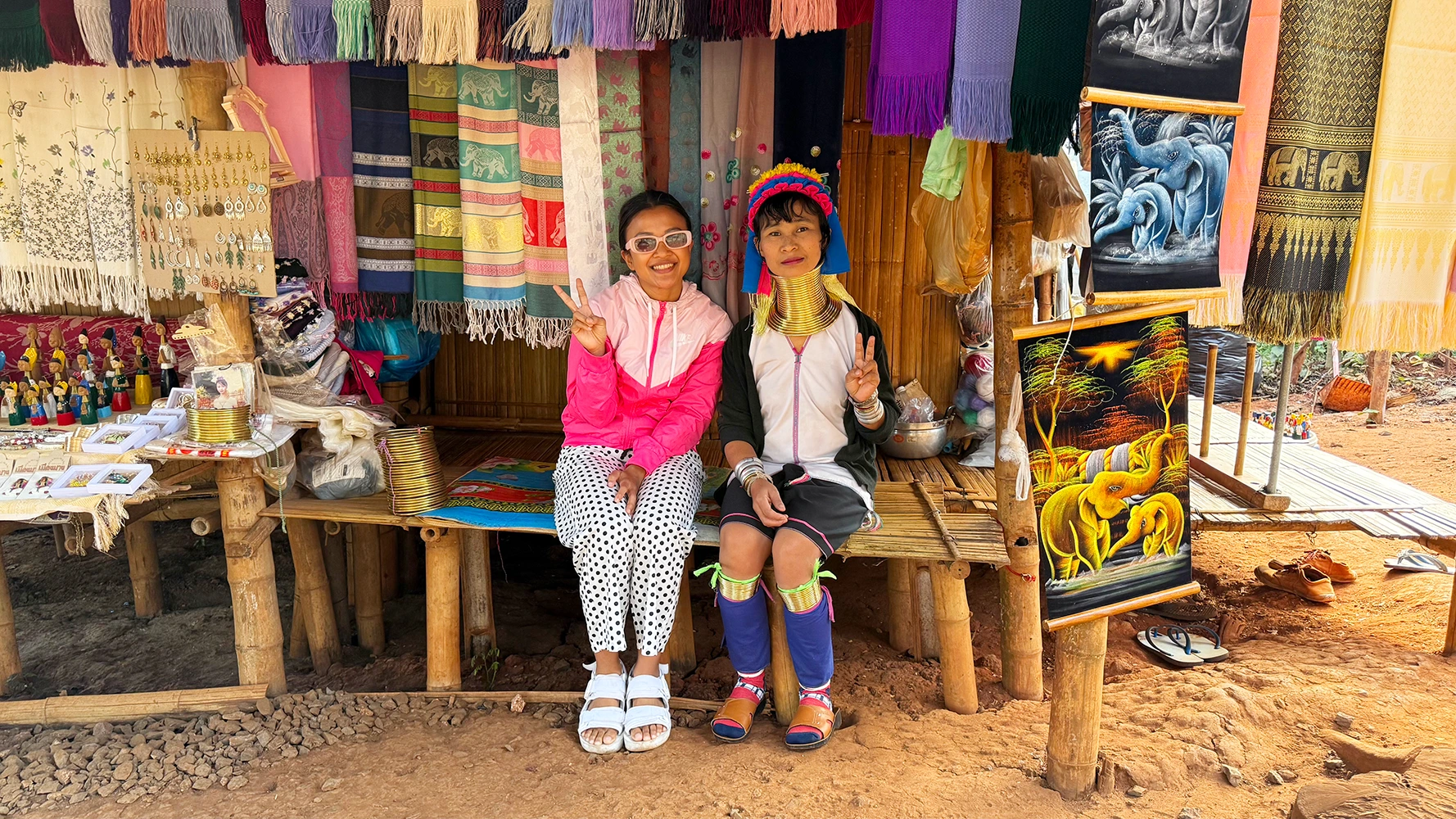
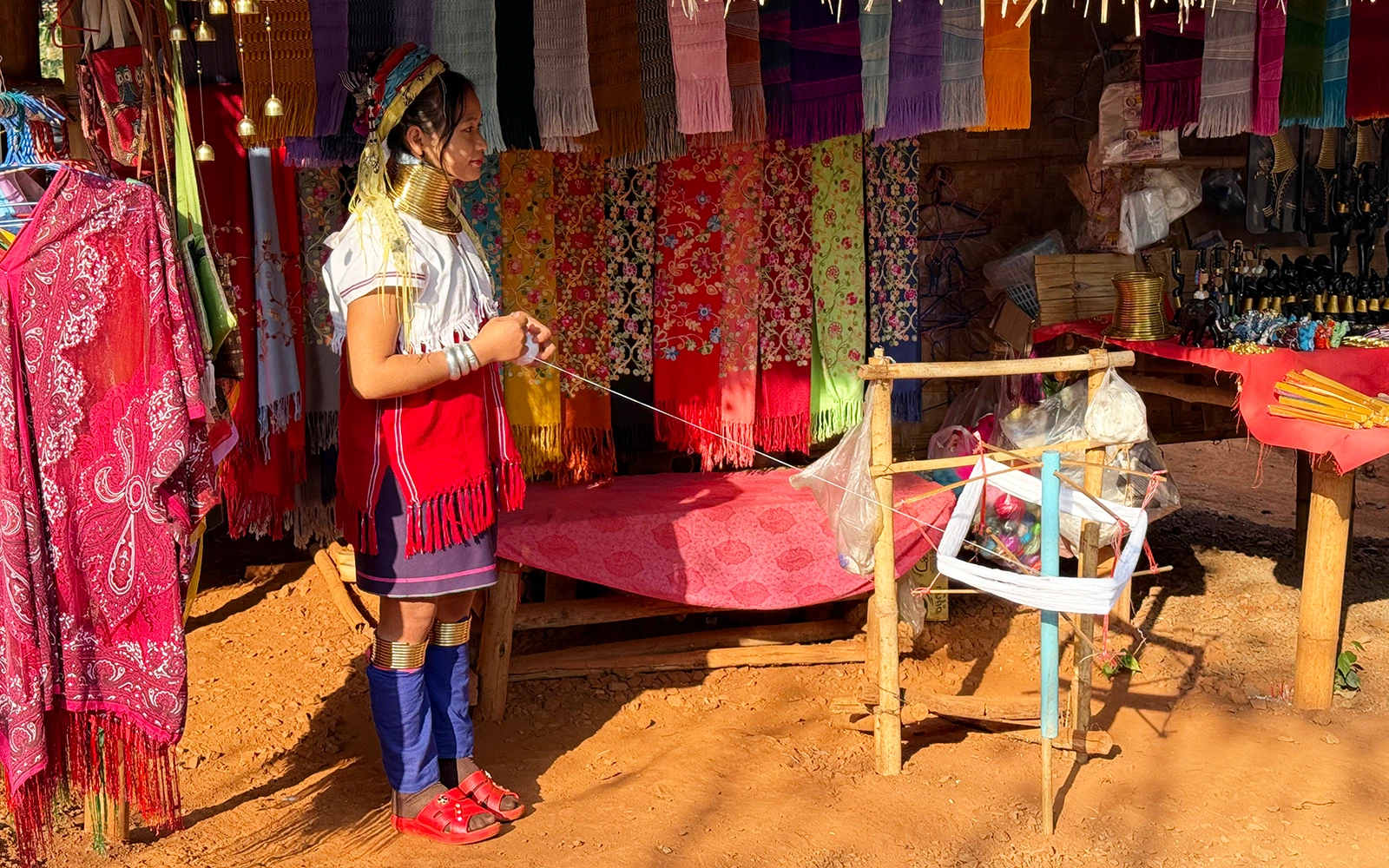
Long Neck Village
We left Chiang Mai around 7am, and about an hour later we had already arrived at the Long Neck Village. By the way, this isn’t their original indigenous village – it’s a tourist site created to introduce visitors to the Kayan tribe. If you’re interested in learning more deeply about the tribe and their way of life, it’s also possible to visit their actual village with a local guide.
The Kayan Long Neck tribe is an ethnic group originally from Myanmar – so they’re not native to Thailand, if I understand correctly. Many migrated across the border seeking safety as refugees, and unfortunately, many still don’t have full legal status in Thailand, which can mean limited access to education and healthcare.
I can see why some people might view this tourist village as controversial. Personally, I felt that visiting, paying the entrance fee and supporting them by buying the handmade crafts and souvenirs they sell – was a small way to contribute directly to their community. I genuinely hope their culture continues to exist and be preserved.
White Temple
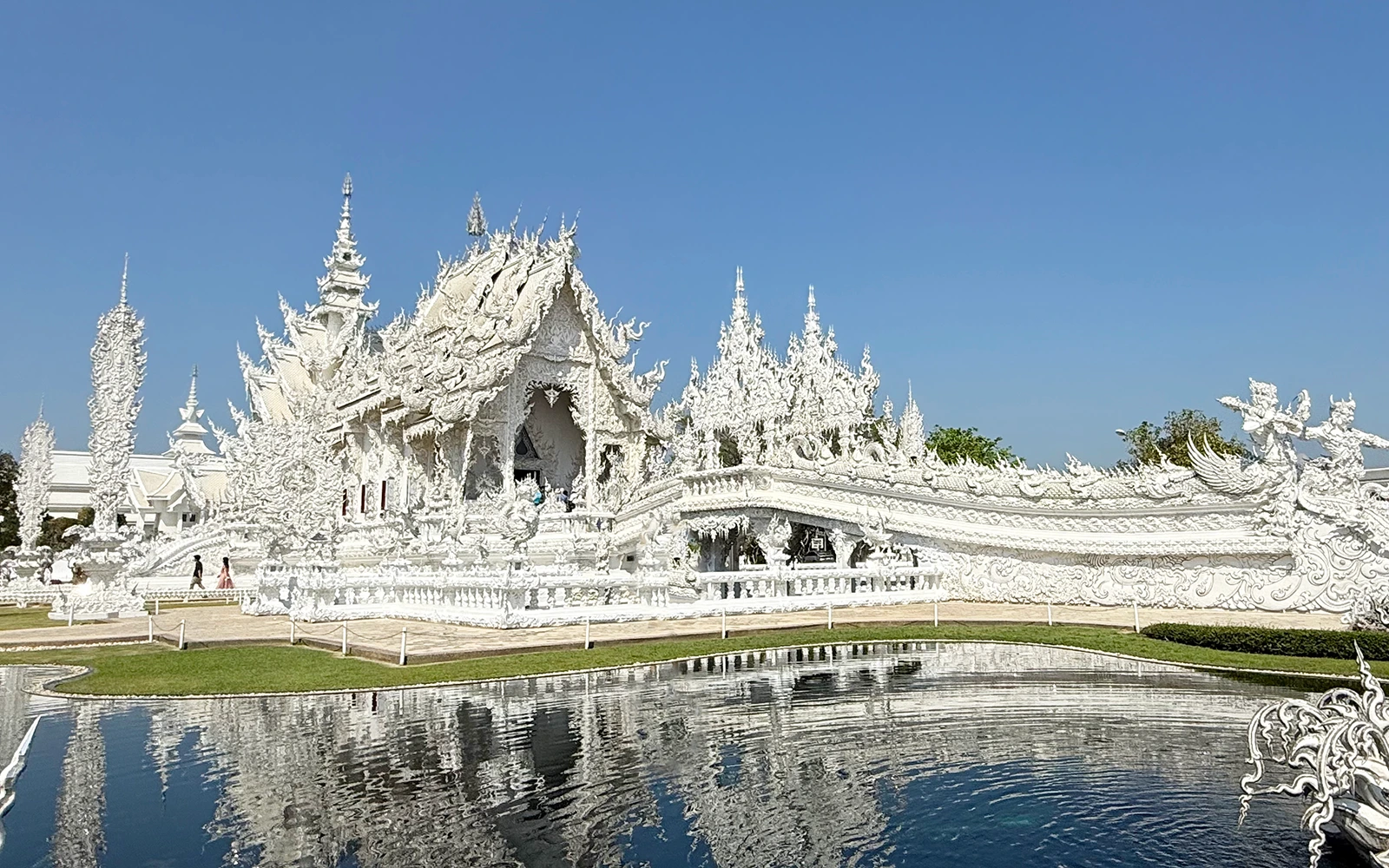
This temple is just as beautiful as it looks on the internet – maybe even more. The entire complex is pure white, covered in incredibly detailed mirror ornaments that sparkle under the sun. I read that it was designed and built by Thai artist Chalermchai Kositpipat. The white colour represents the purity of Buddha, while the mirror fragments reflecting the sunlight symbolise Buddha’s wisdom.
To enter the temple, you walk across a bridge with a lake of tormented hand statues reaching up from below, along with eerie figures symbolising human desire, greed, and suffering. A voice announcement asks visitors to keep moving and not stop on the bridge, representing the idea of leaving darkness behind. At the centre is the main hall, where photography isn’t allowed. Inside, a large Buddha sits surrounded by murals featuring pop-culture characters like Superman, Spider-Man, and Pokémon – not random at all, it is a portrayal of the modern world and the things people become obsessed with today; technology, consumerism, power, and fame.
You could easily spend hours exploring this temple – it’s huge! But I’d recommend going in the morning. Not only does it get very hot by midday, it also becomes extremely busy with visitors. P.S. They have one of the most beautiful toilets I’ve ever seen.
You may also like this article: A Guide to Doi Suthep Temple, Chiang Mai – 4 Things to Know
Blue Temple
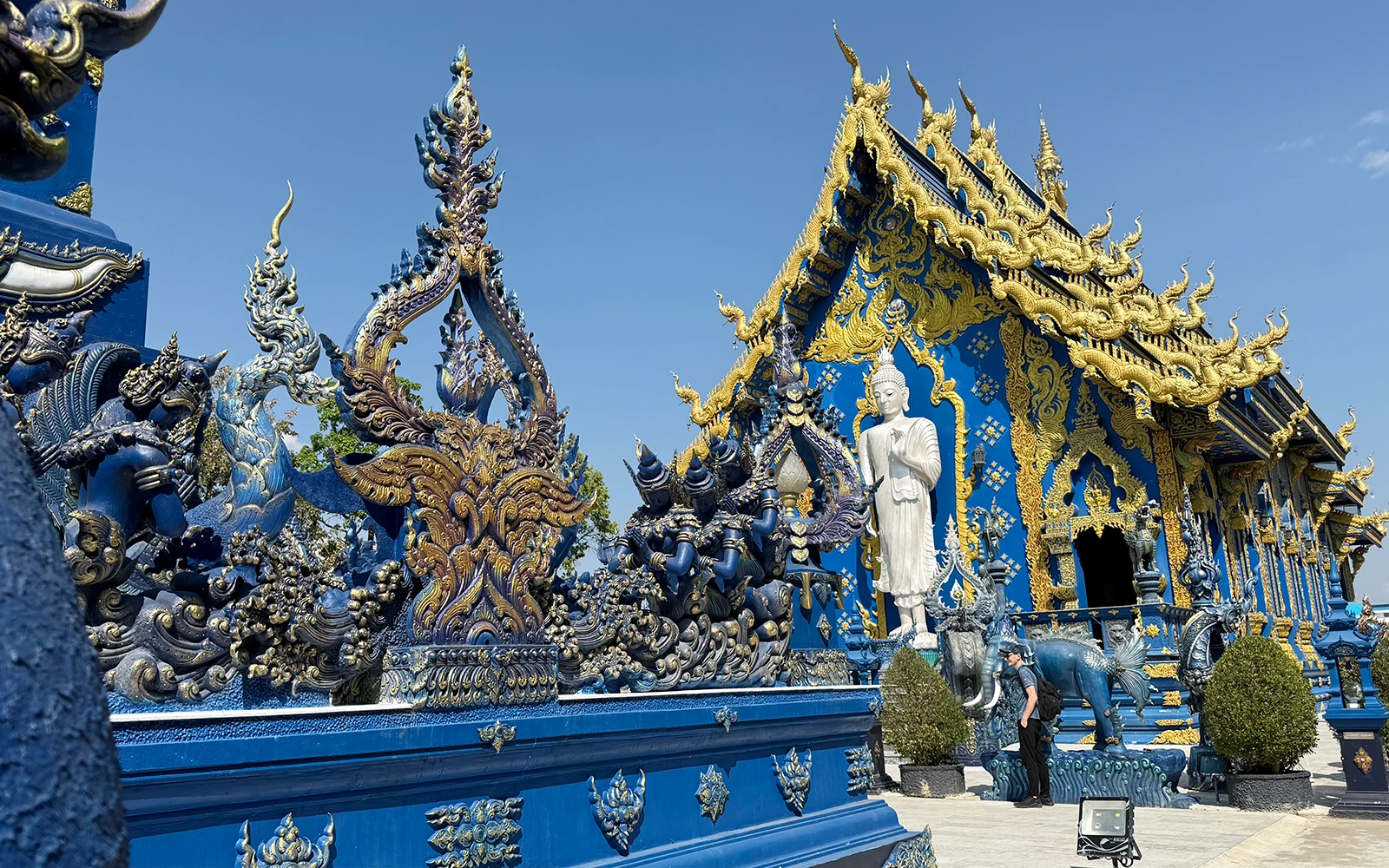
Located only about 10 minutes from the White Temple, is the Blue Temple. It was designed by Phutta Kabkaew, a student of Chalermchai Kositpipat – the artist behind the White Temple. Dominated by vibrant blue with a touch of gold, the temple carries a similar artistic style, but here the colour blue represents Buddha’s infinite wisdom.
The temple is also known as the “Temple of the Dancing Tiger.” Legend says that villagers once saw tigers roaming and leaping around the temple grounds many years ago. Visitors are allowed to enter and take photos inside the prayer hall, where a giant white porcelain Buddha sits beautifully at the centre, making it a striking space to admire.
Big Buddha
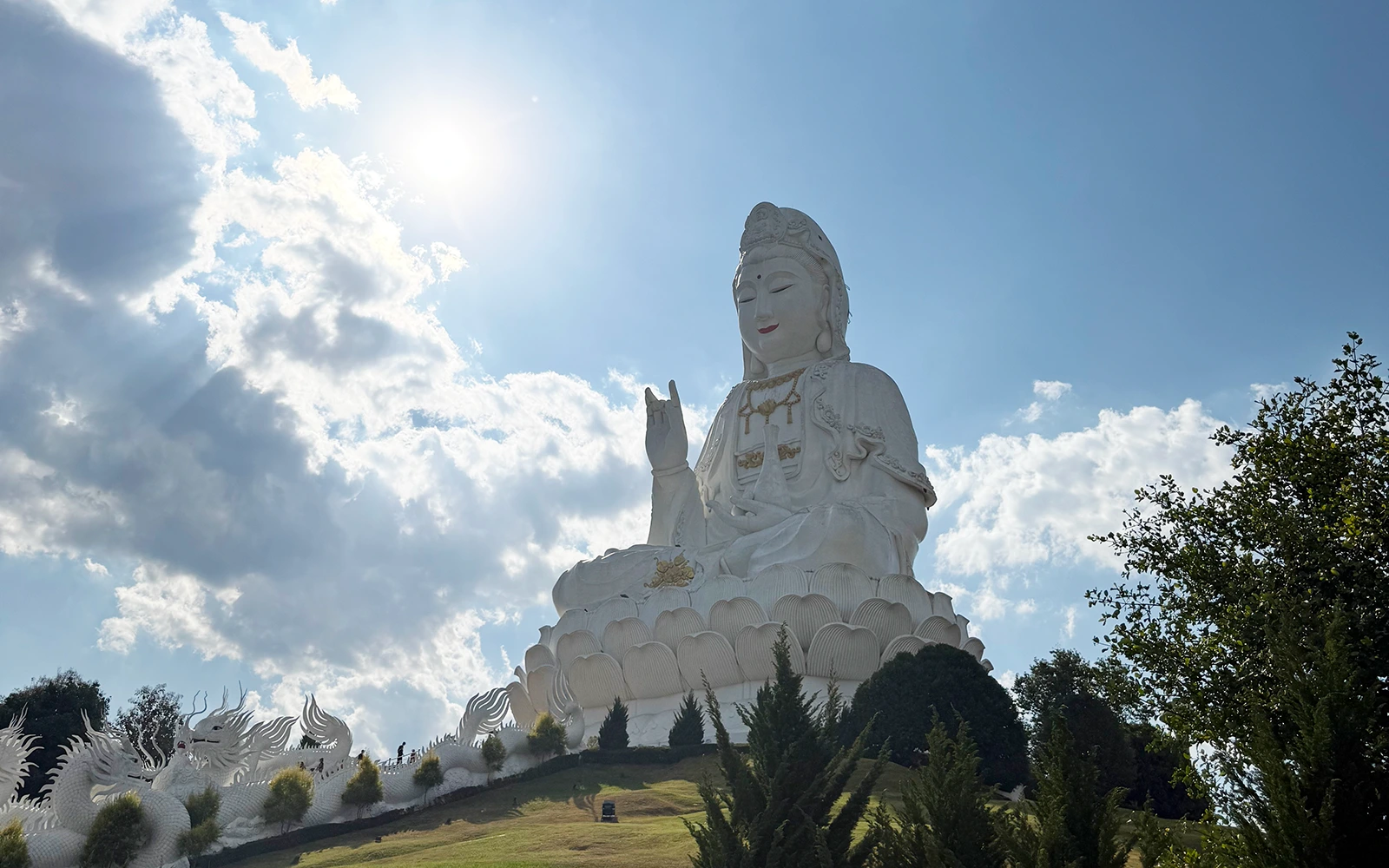
One last stop before heading back to Chiang Mai was the Big Buddha. Sitting atop a hill surrounded by greenery is a giant statue of Guan Yin – or Indonesians may know her better as Dewi Kuam Im, the Goddess of mercy and compassion. You can spot the statue from far away, but the closer you get, the more impressive (and of course, the bigger) it becomes.
Unlike the White and Blue Temples, the Big Buddha feels much calmer and less crowded. It’s believed that praying here brings good health and fortune. Personally, I’ve always seen Dewi Kuam Im as a powerful symbol of compassion and I do believe in kindness and positive energy.
Singha Park
We originally planned to stop by Singha Park because there was a hot air balloon festival happening that very day. Since the park is on the way back to Chiang Mai anyway, we thought – why not? We arrived around 6pm, which I assumed would be the perfect time to catch the show, but unfortunately it turned out the balloons were scheduled to launch much later. We also had to take a shared songthaew ride to reach the lake where the festival was taking place.
Because we hadn’t planned to stay overnight in Chiang Rai and didn’t have any accommodation booked, we eventually decided to head back home instead. The park itself was lovely, though and definitely worth adding to your list. It would’ve been nice to see the hot air balloon festival, which is apparently a big annual event with participants from all over the world. Oh well – next time 🙂
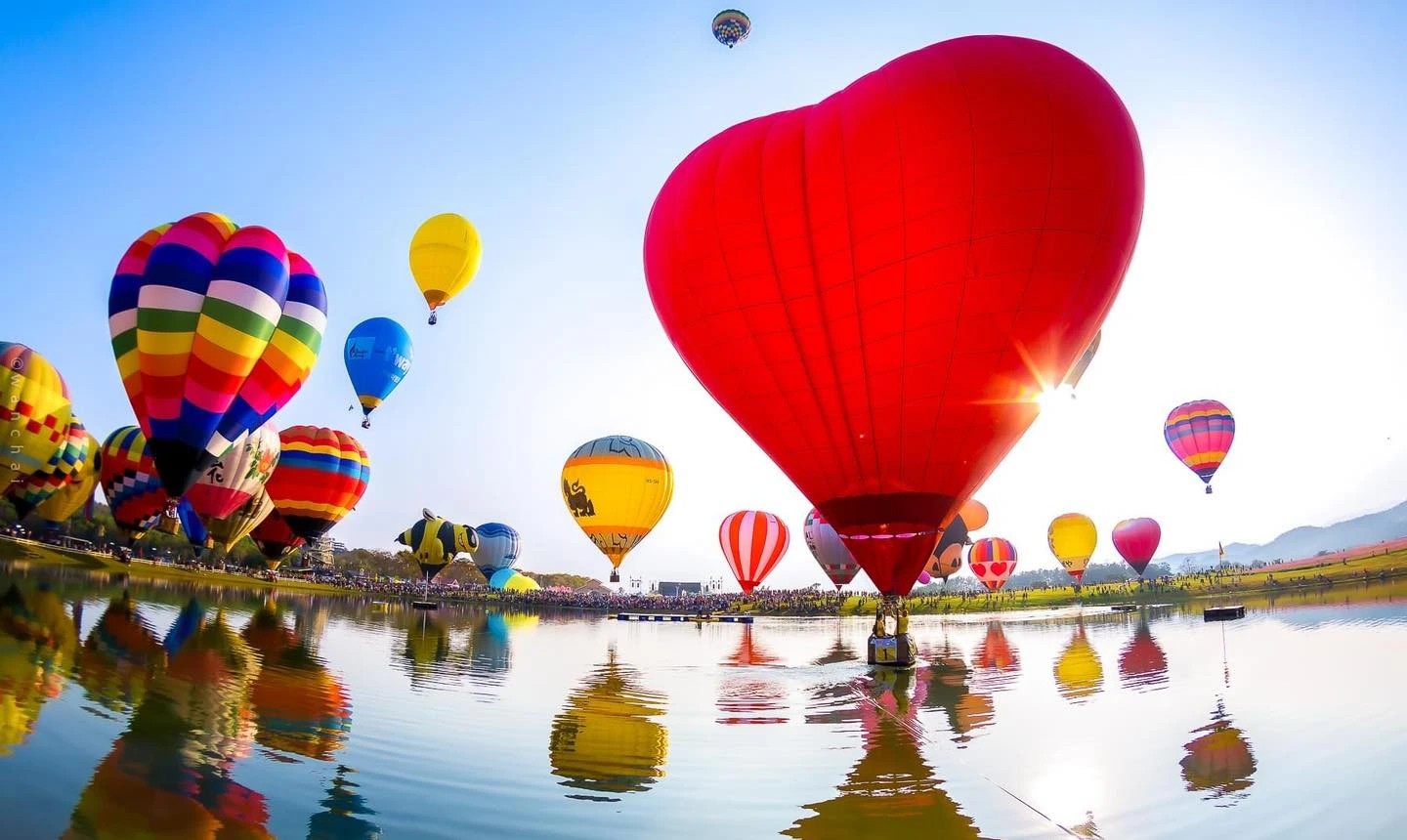
Image credit: Chiang Rai Balloon Fiesta
Even though it was just a day trip, Chiang Rai felt quite different from Chiang Mai – quieter and full of little surprises (literally, like when we stopped for lunch and the restaurant owner realised we were Indonesian and told us he had visited Medan 20 years ago, haha!). We managed to see a lot in one day, but there are still plenty of places left on the list, like the Black House Museum (Baan Dam) and other lesser-known temples and viewpoints scattered around the region.
Maybe that’s a good reason to come back. Chiang Rai feels like a place best explored slowly, and next time, I’d probably stay a night or two to really experience it properly (and hopefully watch the hot air balloon festival!).


No comments yet.