Kata Bella Logo

Info

What It’s Like to Live in Bali: Cost, Culture, and Everyday Life
22 May 2025 by Bella

What It’s Like to Live in Bali: Cost, Culture, and Everyday Life Image

If you’re new to Kata Bella, you’re probably wondering what this website is all about. So hi! I’m Bella. I started this page as a blog to share fun and interesting things about life in Bali – the place I’ve called home for the past 12 years, as well as bits and pieces from my journeys outside Bali too.

I first moved here completely unplanned – I “accidentally” got a job while travelling. Yep, accidentally. I left my big city life behind and landed on this island with nothing but a small suitcase.

Wait…where is Bali again?

Bali might sound familiar –  people talk about it all the time. But I’m no longer surprised that a lot of people still don’t know where it is (It’s okay, though. No judgement here).

So here’s a quick geography check: Bali is a small island in Indonesia, a country in Southeast Asia made up of over 17,000 islands. Despite all that competition, Bali has consistently been in the spotlight as one of the most popular tourist destinations in the world.

You might also like this article: Things to do in Bali – Fun Art Classes at Rumah Rabbit

The magic of Bali: what keeps people coming back

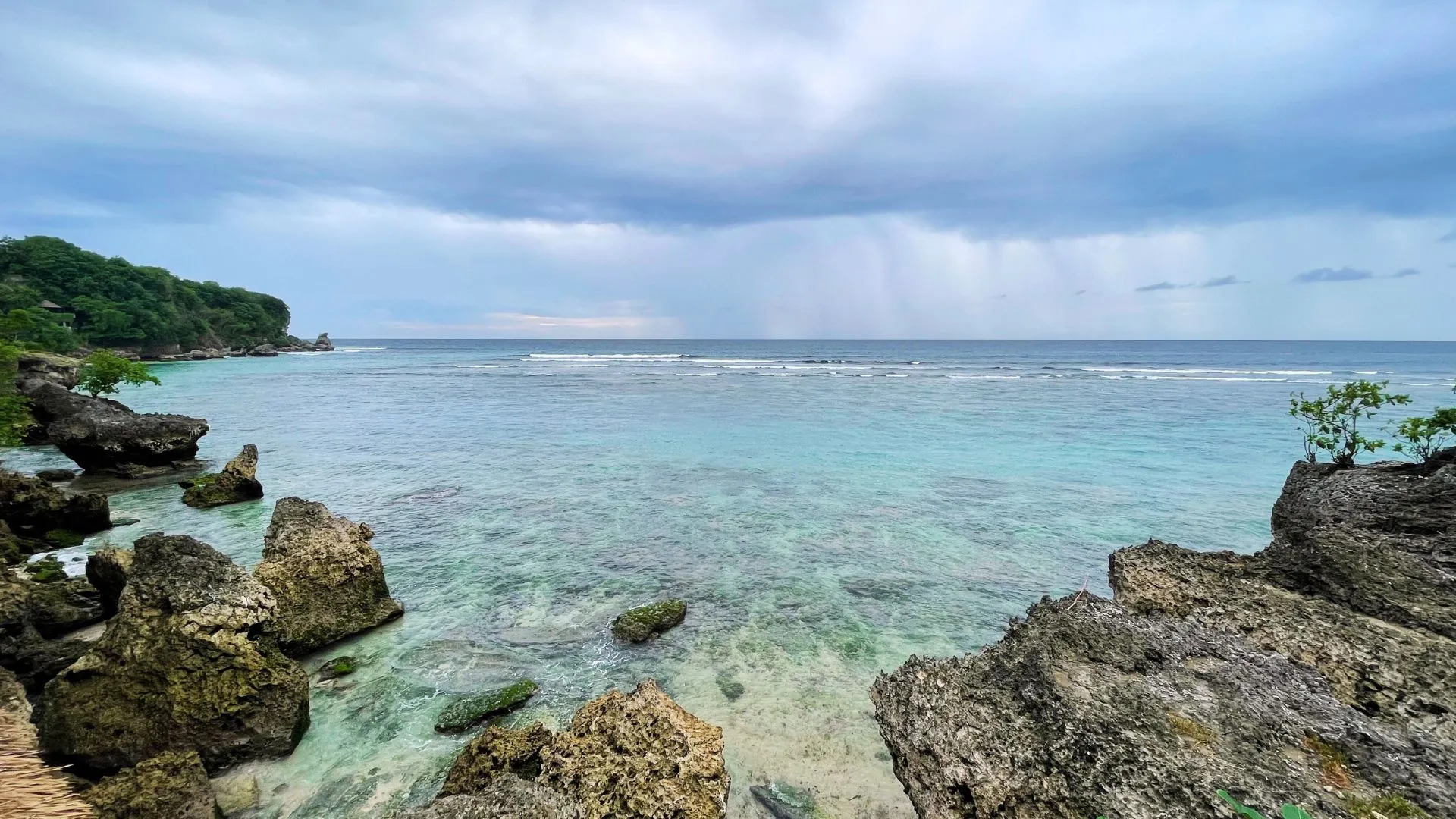
There are plenty of reasons! Surfing is a big one. Not for me, but a lot of the friends I’ve met here came for the waves and ended up never leaving. Bali’s got some legendary surf spots, especially for seasoned surfers, like the world-famous Uluwatu, Padang Padang, and Bingin. 

Another major perk is the tropical weather. Bali has only two seasons: the wet season, usually from November to March, and the dry season for the rest of the year. Simple, sunny, and warm pretty much all year round – no winter coats needed! Beyond the beaches, there are some lush green rice terraces. You might recognise some of them from Eat Pray Love. Two of the most iconic ones are Tegalalang and Jatiluwih.
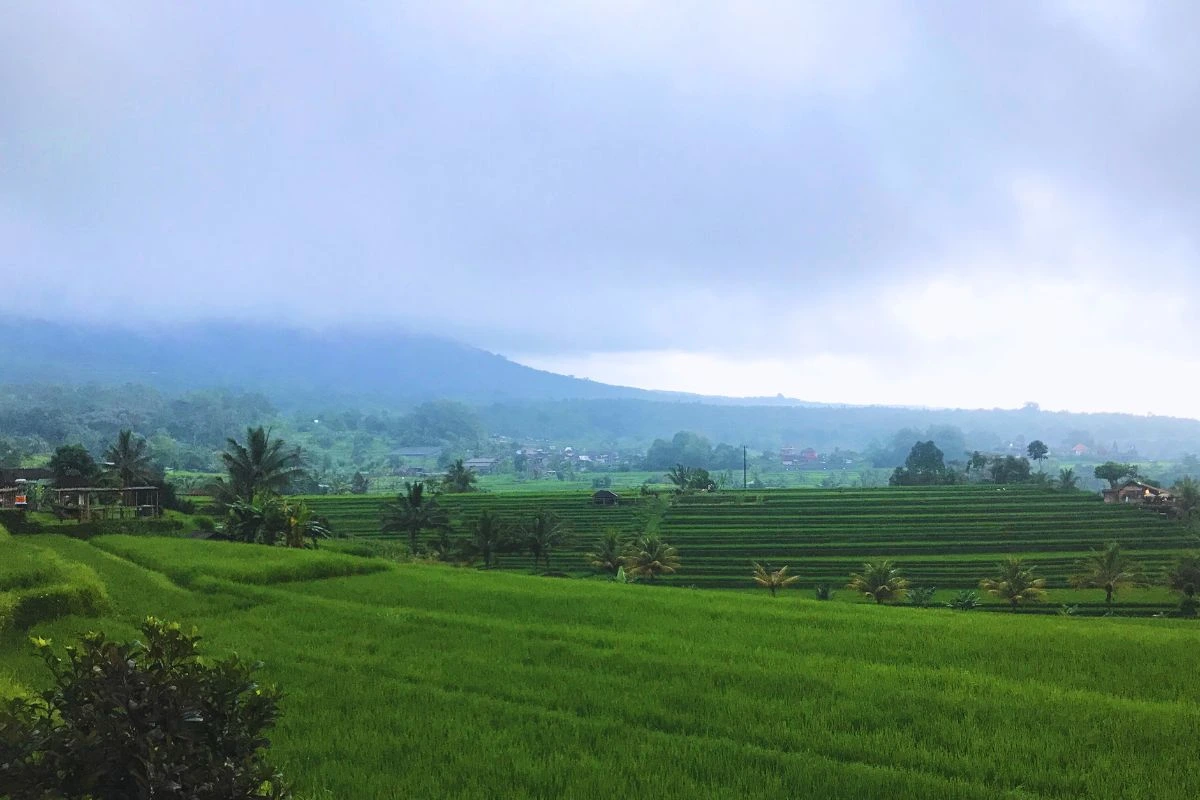
Jatiluwih rice fields – known for producing good quality organic rice

If you’re more into hiking, Bali’s got that covered too. The island is home to several volcanic mountains, with options for everyone – from casual hikers to hardcore trail runners. Mount Batur is a popular sunrise hike that’s beginner-friendly, while Mount Abang or Mount Agung offer a more challenging climb.

Ok next, chances are, you’ve heard that many people come to Bali to find healing, with plenty of spots offering spiritual journeys and wellness retreats. Honestly, the list is endless. Bali really does have something for everyone. Whether you’re into silent retreats and meditation or the party scene (I’ve been through all kinds of phases during my 20s here, hehe).
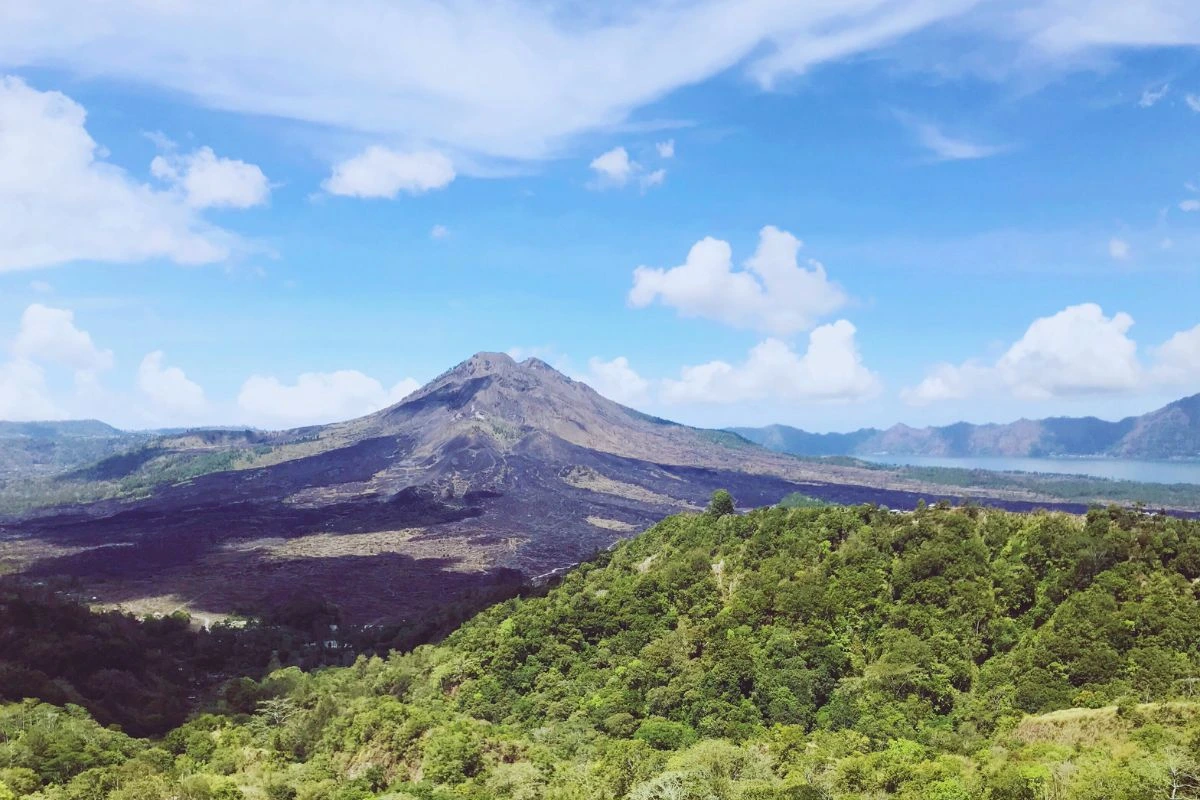
The highland areas of Bali, like Kintamani and Bedugul has cooler temperatures

But for me, it’s the local Balinese people who make Bali truly special. While they’re open-minded and influenced by Western culture, there’s still a deep-rooted sense of tradition, spirituality, and ceremony. It’s not unusual for your Monday morning commute to be paused by a temple procession right in the middle of the road – and that’s part of the charm. I often get invited to odalan (ceremonies), and I still remember getting my first Balinese attire. Next thing I knew, I had a whole collection in different colours for all kinds of occasions!

What to expect when you live in Bali

Living in Bali definitely has its perks – especially if you’re into that laid-back, but not too slow, kind of slow living. It’s not as fast-paced or hectic as Jakarta or other big cities, so if you’re all about climbing the corporate ladder, Bali might not be the best fit. But it’s not super quiet either – definitely not like a sleepy village. Bali strikes a nice balance between work and play, hustle and chill.
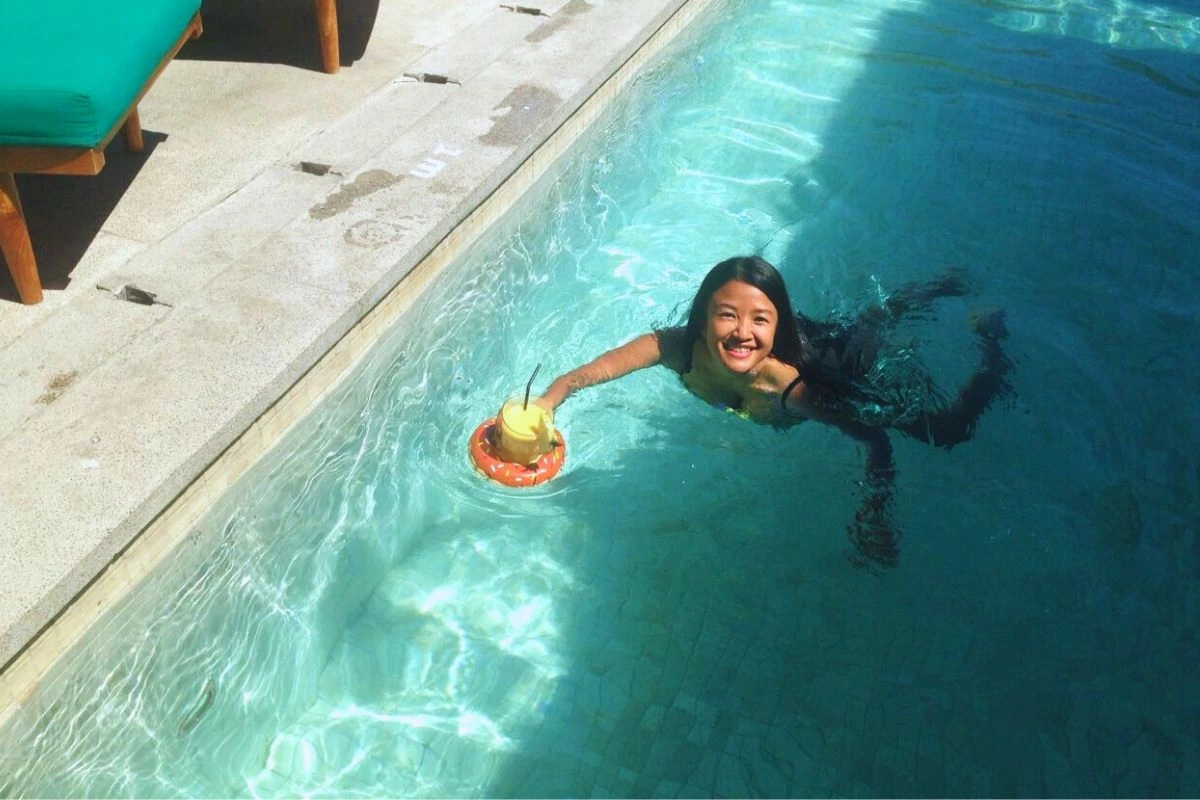
It’s a real perk to still have time for yourself after work

I said yes to my first job here because I was drawn to the work-life balance, the quality of life, and the lifestyle I wanted. Sure, work is still work – busy days happen just like anywhere else, but it’s the little things that make a big difference. Like riding your scooter to work and stopping by a nice little coffee shop (many open crazy early, like 6 or 7am – Thank you to the early-rising surfer crowd!). Or clocking out right on time at 5pm when the sun’s still shining, and having enough time to catch up with friends, go to my jiu jitsu class, or general errands.

It’s all about having the time and space to do more than just work – and being reminded every day that life’s meant to be enjoyed, not spent glued to a screen.

You may also like this article: Brunch in Bali – Rediscovering Legian through Farmer’s Daughter

Living cost in Bali: what you need to know

There’s really no right or wrong answer to this – it all depends on your lifestyle. Since Bali’s in Southeast Asia, things are generallypretty affordable. If you live like the locals do; eat at warungs (local eateries), rent in residential neighbourhoods, shop at traditional markets, and ride a scooter to get around – then yes, living in Bali can be really cheap. You could comfortably get by on a modest budget.

But if you’re chasing that dreamy Instagram lifestyle; private villas with pools, daily brunches at photogenic cafés, shopping at boutiques, and regular spa treatments, then Bali can get expensive quickly. Many of those things are priced for tourists and expats, not locals.

And let’s talk about extras: gyms, yoga studios, pilates, martial arts, CrossFit, dance classes, imported groceries, international schools if you have kids, all those things that have been brought into Bali from the outside are still considered “luxuries” here. So they’re priced accordingly. 

So yeah, Bali can be as cheap or as pricey as you make it. It’s all about what kind of life you want to live. Let me break down the math for you.
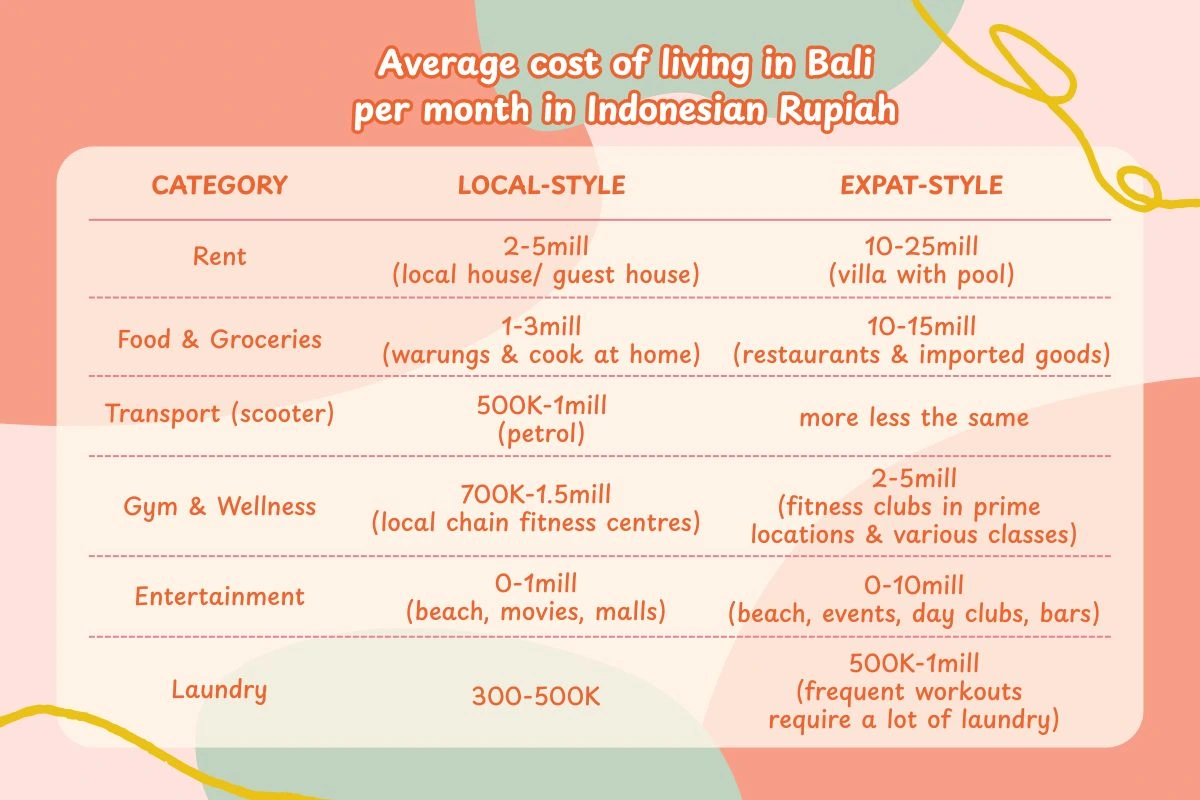
Getting around Bali: scooters, taxis, and more

One of the first things you’ll notice when living in Bali is just how popular scooters are. Renting or buying a scooter is by far the easiest and most affordable way to get around the island. Just make sure you’re steady and confident enough to navigate Bali’s often chaotic streets – and always wear a helmet for safety!

If you’re not comfortable driving, it’s probably safer to avoid it. There are plenty of taxis available, and apps like Gojek or Grab make getting around affordable and hassle-free. Personally, I’m not a fan of traveling by car here because, aside from the highways and main roads, Bali’s streets are narrow and prone to heavy traffic – especially during peak holiday seasons. So, if you want to survive and thrive in Bali, a scooter is definitely your best friend.

Food scene in Bali: local flavours and international eats

Don’t worry – I didn’t forget to write about the food. Bali’s food scene is just as diverse as the island itself. You can eat like a local with nasi campur (rice with various side dishes), satay skewers, babi guling (suckling pig), or ayam betutu (Balinese spiced grilled chicken) at any warung (local food stall).

But does “Bali belly” exist? Well, it’s a valid concern – Balinese, or Indonesian spices can be a bit intense for first-timers, so go easy in the beginning and listen to your gut (literally).

If you’re craving something more familiar, Bali is a total melting pot. You’ll find just about every type of cuisine here; from Japanese and Italian to Middle Eastern, Indian, and more. There are also loads of vegetarian, vegan, and gluten-free options, so no one gets left out at the table.

You might also like this article: Bali Home Bakeries to Sweeten Your Celebrations

Okay, so that’s a rough idea about Bali and what living in Bali is like – at least through the eyes of a girl who came for one year and somehow ended up staying for twelve (still here!).

In short, I genuinely love living here. It’s not always rainbows and butterflies, of course, especially when high season traffic hits – but hey, I am totally aware that I live in a holiday destination 😉

If you’re thinking about making the move or just curious about what it’s really like to call Bali home, stick around. I’ll be sharing more stories, tips, and guides to help you navigate island life with a little more ease and a lot more fun. 

Matur Suksema for reading!
You might also want to read

Canggu Travel Guide: Surviving Bali's Busiest Neighbourhood Image

24 May 2026 by Bella in Info

Canggu Travel Guide: Surviving Bali's Busiest Neighbourhood

Canggu Travel Guide Canggu is only a tiny dot on the map of Bali, and yet more and more people seem drawn to that little dot more than anywhere else - sometimes forgetting there’s so much beauty on the other sides of the island too: rice fields, waterfalls, mountains, and the sea to dive into (literally). But I get the appeal. Canggu somehow has everything packed into one neighbourhood. If you don’t mind the always-busy streets, it’s the capital of fitness culture, surfing, food, food (yes, I mentioned food twice on purpose because there are just SO MANY good spots), recovery culture, remote work life, and… a traffic simulator too. Most people arrive in Canggu thinking it’ll just be a quick Bali stop. Then suddenly they’re extending their villa stay, signing up for Hyrox sessions they never planned to take, and debating which oat milk flat white is “the best in Berawa.” It happens fast. So if you’re looking for a proper Canggu travel guide, here’s the insider version. You may also like this article: What It’s Like to Live in Bali: Cost, Culture, and Everyday Life AREAS TO STAY Batu Bolong Crowd-o-metre: 9/10 Spoiler alert, it's probably the heart of Canggu chaos because this is pretty much the main strip that has everything. If someone says they’re “in Canggu,” there’s a high chance they mean Batu Bolong. Here, you’ll find: Busy cafés, warungs, and restaurants on basically every corner Convenience stores every few steps (you’ll never be far from iced tea or instant noodles) Medical centres and pharmacies for all your Bali emergencies Shops selling everything from surfwear and jewellery to random little knick-knacks Beach bars, breweries, live music spots, and sunset crowds All kinds of massage places, from 150K local spots to fancy 1Mill spa experiences Scooters everywhere, all the time Digital nomads with laptops in cafes Stay here if you are: A solo traveller who wants everything within walking distance A couple or single traveller who enjoys being in the middle of the action A remote worker A café hopper or coffee lover Someone who likes having options for literally everything A first-timer in Bali who wants the full “Canggu experience” Billie's, one of my favourite souvenir shops in Canggu Berawa Crowd-o-metre: 8/10 Every part of Canggu is busy, but Berawa feels a little more like an area where people actually live, mainly because first-time Bali visitors tend to gravitate more towards Batu Bolong. It’s still lively, but slightly more residential. There are also lots of brunch spots, nice restaurants, and gyms. Here, you’ll find: Restaurants with playgrounds and bigger spaces that are more family-friendly Healthy cafés, smoothie bowls, salad spots, and every kind of wellness food Villas - from cosy tropical stays to massive designer villas Coffee shops that have been around long before Canggu became "Canggu" Mid-to-upscale restaurants with cuisines from all over the world Fitness centres, recovery centres, and dance studios Boutiques, beauty salons, and concept stores Stay here if you are: A couple or family Planning to explore other neighbourhoods, since it’s slightly closer to Seminyak A foodie who wants international dining options Into fitness, wellness, or remote-working culture Pererenan Crowd-o-metre: 7/10 Pererenan is slightly less chaotic because it’s not right in the centre of the Canggu madness. Rice fields still exist here - they haven’t all turned into villas, cafés, or gyms every other month. The vibe feels more residential and slower-paced compared to Berawa or Batu Bolong. Areas like Tumbak Bayuh and Tiying Tutul are great options if you want a quieter stay while still being close enough to all the Canggu comforts. Here, you’ll find: Small boutique hotels and villas in quieter streets A mix of fitness spots - from local gyms to fancy wellness clubs, padel courts, martial arts gyms, and recovery centres More relaxed cafés, warungs, and restaurants A calmer remote-working crowd compared to Batu Bolong Stay here if you are: Wanting to stay close to Canggu, but not directly inside the chaos Not super into partying every night Into surfing, fitness, or wellness Happy to trade convenience for a slightly calmer atmosphere Okay with driving further for malls or bigger shopping areas - with Bali traffic, it takes 1-2 hours to get to Kuta Cure, one of the newest seaside restaurant and bar in Canggu PLACES TO EAT IN CANGGU I’ve written a few articles about restaurants in Canggu — from cheap eats to smarter dining spots — which you can find here: My Little Canggu Restaurant List - Part 1 My Little Canggu Restaurant List - Part 2 Bali on a Budget: Cheap Eats in Canggu for Under 100K 5 Must-Visit Best Coffee Shops in Canggu, Umalas, and Nearby Areas BEACHES AND SUNSET SPOTS If it’s your first time in Bali, or in Canggu, you might notice that the beaches here aren’t the postcard-style turquoise beaches people usually imagine when they think of Bali, like the ones in Uluwatu. The sand is dark here, and these aren’t really the kind of beaches people come to quietly sunbathe all day. In true Canggu fashion, the beaches here are more about the social life. Surfing, sunset drinks with friends, beach bars, music, people-watching, and somehow running into the same people everywhere you go. Canggu sunsets are basically a daily ritual. Around 5pm, everyone somehow ends up facing the ocean - surfers still sitting in the waves, people on bean bags with coconuts or Bintangs, kids running around, dogs playing on the beach, and someone inevitably playing acoustic music nearby. A few local beaches worth checking out: Batu Bolong Beach - probably the most social and busiest beach in Canggu Berawa Beach - popular for beach clubs and sunset hangouts Echo Beach - known for surfing and sunset spots Pererenan Beach - less hectic, with a more local and residential feel compared to central Canggu. Seseh Beach - technically a little outside of Canggu, but worth mentioning if you want somewhere quieter There are often community activities on the beach, like this grappling session my gym Woven organised TRAFFIC REALITY CHECK This part belongs in every honest Canggu travel guide: the traffic. It can get really chaotic, especially during high season, rush hours, sunset time, and dinner hours when everyone seems to leave the house at once. A distance that looks “close” on Google Maps can sometimes test your patience, your scooter skills, and your decision to stay in Canggu. The usual traffic hotspots: The famous Canggu shortcut - the worst that could happen is a full-on gridlock with scooters squeezing through every possible gap Berawa junction - somehow busy at almost every hour of the day Batu Bolong main road before sunset and dinner time Any road near beach clubs during sunset hours Random tiny streets that suddenly become two-way traffic with 200 scooters and one confused car Best strategy: Stay close to the area you’ll spend most of your time in Don’t over-schedule your days Drive a scooter or use Gojek/Grab if you’re not comfortable riding Leave earlier than you think you need to Accept that “5 minutes away” in Canggu is sometimes emotionally optimistic So yeah, Canggu is a strange little bubble where wellness trends, digital nomads, smoothie bowls, rice fields, and traffic chaos somehow all coexist together. Some people absolutely love it, some people leave after two days overwhelmed, and somehow both reactions make complete sense. Hope you find this Canggu travel guide useful. Have a fun trip, stay safe, and always wear a helmet when you’re on a scooter - even if you’re only going 200 metres away. Thanks for reading!

Creative Connections: 5 Bali-based Illustrators and Designers Image

16 Mar 2026 by Bella in Info

Creative Connections: 5 Bali-based Illustrators and Designers

(Main image by Hemo Art) “Bells, do you know any freelancers who can help me with a design?" Aside from “Where’s your favourite bakery to go for scones?” - this is probably one of the most common questions I get from friends (knowing I work in the creative field). Lucky for you, I do know some talented folks, but it really depends on what you’re after. A logo? Branding services? Graphic design? Product design? Illustrations? Let me help you out!  Hemo ArtClara Claudia SafistaFinda AyuKumonjiaBunny  Hemo Art The world of Hemo Art is imaginative, whimsical, and full of personality. Their work screams fun, colourful, and cute, with a signature style featuring quirky monster characters you can’t help but love. Illustration is their strong suit, making them a perfect fit if you’re looking to build a brand, create a children’s storybook, or design playful packaging.  👩🏻‍🎨 Specialty: Illustration and children story books🎨 Portfolio: www.behance.net/hemo-art📱 Instagram: @hemo.art Playful, imaginative, and cheerful, Hemo Art is perfect for kids projects Clara Claudia Safista Clara is a multi-talented artist with a diverse skill set. She helps brands grow through brand identity development, logo creation, digital and printed collaterals, vector work and illustrations, as well as technical packs for the fashion industry. Bonus point: She’s also an absolute sweetheart, making every collaboration feel easy and enjoyable. 👩🏻‍🎨 Specialty: Illustration and graphic design🎨 Portfolio: https://claraclaudiakeke.myportfolio.com/📱 Instagram: @claraclaudia.14  If you're starting a business, Clara can translate your vision into a brand kit You may also like this article: The Vibrant Journey of Xoxo Bali - 2024 local shop guide Finda Ayu If you don’t know already, Finda Ayu is the creative mind behind Bali’s vibrant merchandise brand, Xoxo Bali. If you head over to their page, you’ll quickly get a sense of her illustration style and visual identity. While her main work lies in product design, she’s also highly versatile and can adapt to whatever you need on the graphic design side - from social media content and promotional materials to branding assets, packaging, and more. 👩🏻‍🎨 Specialty: Illustration, product design, and graphic design🎨 Portfolio: https://www.behance.net/findaayu📱 Instagram: @xoxobali Finda has collaborated with various big brands like Disney, Surfer Girl, and Bali Soap Kumonjia Their main work is illustration, known for a soft watercolour style, but they can actually adapt to all kinds of visual directions- from cute and playful to clean and corporate. They also handle brand kits if you’re starting a business, photography, motion graphics, promotional materials, menu design, product design, and more. Basically, whatever style or creative support you need, Kumonjia delivers. 👩🏻‍🎨 Specialty: Illustration and graphic design🎨 Portfolio: https://kumonjia.myportfolio.com/illustration📱 Instagram: @kumonjia From passion projects to corporate briefs, Kumonjia can adapt effortlessly Bunny  Bunny works on her personal project Bunny Bone - a collection of reflections about herself, women, and Indonesia’s culture and people, which she deeply loves. The works are mostly acrylic paintings for now. More recently, she’s also been developing Bunny Jitsu, a jiu jitsu-inspired art project featuring digital art, oil pastel drawings, and merchandise.So if you’re looking for acrylic projects or jiu jitsu-inspired commission work, from merchandise to murals, she’s your girl.  Ps. She is also the founder of Rumah Rabbit Bali, an art space dedicated to creativity and playful learning. 👩🏻‍🎨 Specialty: acrylic painting, oil pastel drawing, digital art🎨 Portfolio: Check out her works on Instagram📱 Instagram: @bunnybone, @bunnyjitsu, @rumahrabbitbali Some of Bunny’s recent work includes a mural at a new jiu jitsu gym in Jakarta You may also like this article: Things to do in Bali: Fun Art Classes at Rumah Rabbit And there you have it - talented creatives from Bali who are definitely worth keeping on your radar. Whether you’re building a brand, working on a passion project, or simply need a fresh visual touch, these lovely humans might just be the collaborators you’re looking for. If their work speaks to you, don’t hesitate to reach out and say hello. Who knows, it might just be the beginning of a beautiful creative partnership. Hope you find this useful, and thank you for reading! 😊

Getting Married in Denmark: A Step-by-Step Guide (Part 2) Image

10 Jan 2025 by Bella in Info

Getting Married in Denmark: A Step-by-Step Guide (Part 2)

Getting Married in Denmark: A Step-by-Step Guide (Part 2) So you’re here because you’re either a mixed-nationality or mixed-religion couple looking for a way to get married without the endless paperwork headache, or you’ve already read my previous article, “Getting Married in Denmark: A Step-by-Step Guide (Part 1)” and you’re now ready for the next steps. Either way, welcome! Getting Married in Denmark: A Step-by-Step Guide (Part 2)And Then What’s Next?Before Your Civil CeremonyOn Your Wedding DayA Little Closing Note The Next Steps After Document Submission Once the big admin work is done, the good news is that things get a lot simpler. All you need to do is wait patiently while the agent (Getting Married in Denmark) submits your application and receives your approval from the Danish government. When the approval comes in, you’ll be asked to choose the city hall for your ceremony. Here’s a friendly heads-up: popular venues like Copenhagen City Hall tend to be fully booked unless you secure a date months in advance. Our agent sent us several options; many of them incredibly charming, including a castle-like city hall in the countryside! We loved it, but since my in-laws were joining us, we chose Copenhagen for convenience. Once you’ve agreed on an available date, your agent will take care of the booking. Copenhagen City Hall, where I got married :) And Then What’s Next? After securing your date and venue, it basically turns into a mini wedding planning session (if you’re also hosting a reception). But if, like us, you’re simply going to sign papers and enjoy the moment, it feels more like planning a holiday with a sprinkle of romance hehe. Even though we only had a civil ceremony, I still prepared a dress and bouquet. If you don’t want the hassle of ordering flowers, Copenhagen City Hall rents bouquets - practical and stress-free! The agent can also recommend florists, photographers, and other vendors if you want extra help. They truly are a wedding one-stop-shop. You may like this article: 48 Hours in Amsterdam - A Quick Trip, Big Memories Before Your Civil Ceremony You’ve made it to Copenhagen… now what? One day before your ceremony, you need to register you and your partner at the same city hall where the ceremony will take place. If you’re in Copenhagen, you’ll find the registration counter inside the little gift shop to the left of the main entrance. That’s where you check in and leave your passports. Don’t worry, they won’t keep them for long. They have a rule about not holding passports for more than a certain number of hours or something. While waiting, you’re free to wander around, grab an oh-so-good smørrebrød with fresh Scandi salmon, and treat yourself to a Danish pastry (or three! You go, friend!). By the time you’re done snacking, your passports will be ready, woot woot! :) Me and my best friend Deisha (husband is too shy to be on Kata Bella hehe) On Your Wedding Day “Follow the hearts!” That’s what the lady at the registration desk told us - and she meant it, literally. Heart stickers on the floor guide you to your room. Once you reach the end of the trail, wait there until someone comes down and calls your names. Then it’s time to say “I do!” I had a quick peek online at what the room looked like, but nothing prepared me for how beautiful it was. The murals felt straight out of a Hans Christian Andersen storybook, the kind I grew up reading. We were told they represent the journey of love from the first meeting to a shared life together. Speaking of Hans Christian Andersen, our celebrant ended our ceremony with a quote that has stayed with me ever since: “The whole world is a series of miracles, but we’re so used to them we call them ordinary things.” A Little Closing Note If you’re considering Denmark for your civil ceremony, take this as a sign: it’s worth it! The process is straightforward, the atmosphere feels magical without being stiff or formal, and the experience becomes a beautiful memory rather than a bureaucratic nightmare. If you love simple, meaningful moments (with the bonus of pastries and fairy-tale murals), Denmark might just be the perfect place to start your forever. Oh and by the way, congratulations on your engagement! And good luck!